
7 Principles to Command ChatGPT for Best Results
ChatGPT is not magic. It can feel like a black box until the outputs turn consistent. Most people blame the tool when results look random. Reality is simpler. Output quality mirrors input quality. Clear prompts reduce ambiguity. Clear prompts also reduce generic filler. Prompt discipline turns ChatGPT into a repeatable productivity tool for freelancers, creators and builders.
1. Name the Outcome First
Define exactly what must be delivered, not vaguely what topic to talk about. Modern prompt guides emphasize that clear, specific instruction improves AI output quality by reducing ambiguity in model behavior (Prompting Guide, Optimizing Prompts). Prompt clarity tells the model what success looks like, so it can shape responses around the right target instead of guessing.
Example
Instead of writing
“Write about affiliate marketing”
Write
“Create a 900 word beginner friendly guide explaining how affiliate marketing works in 2026, include three income examples, add one simple action plan, keep the tone practical”
The second prompt names the destination. Length, audience, purpose and output are defined. ChatGPT now has a target to hit, not a direction to wander.

2. Set Role and Audience Together
Assigning ChatGPT a role and audience gives it a mental frame. A journalist style tone sounds very different from an engineer teacher one. Giving identity boundaries directs style and depth of responses right away. The field of prompt engineering teaches the core value of including role context early so AI knows both voice and audience before generating (Microsoft Learn, Prompt engineering techniques). This step cuts trial-and-error cycles when shaping outputs like email copy, pitch decks or blog outlines.
Why This Works in Practice
• Role sets the thinking style and decision rules
• Audience sets the reading level and examples
• Both reduce revision loops
• Output becomes publish ready faster
This pairing turns ChatGPT from a general responder into a focused collaborator with a clear voice target.

3. Give One Strong Example Before Asking
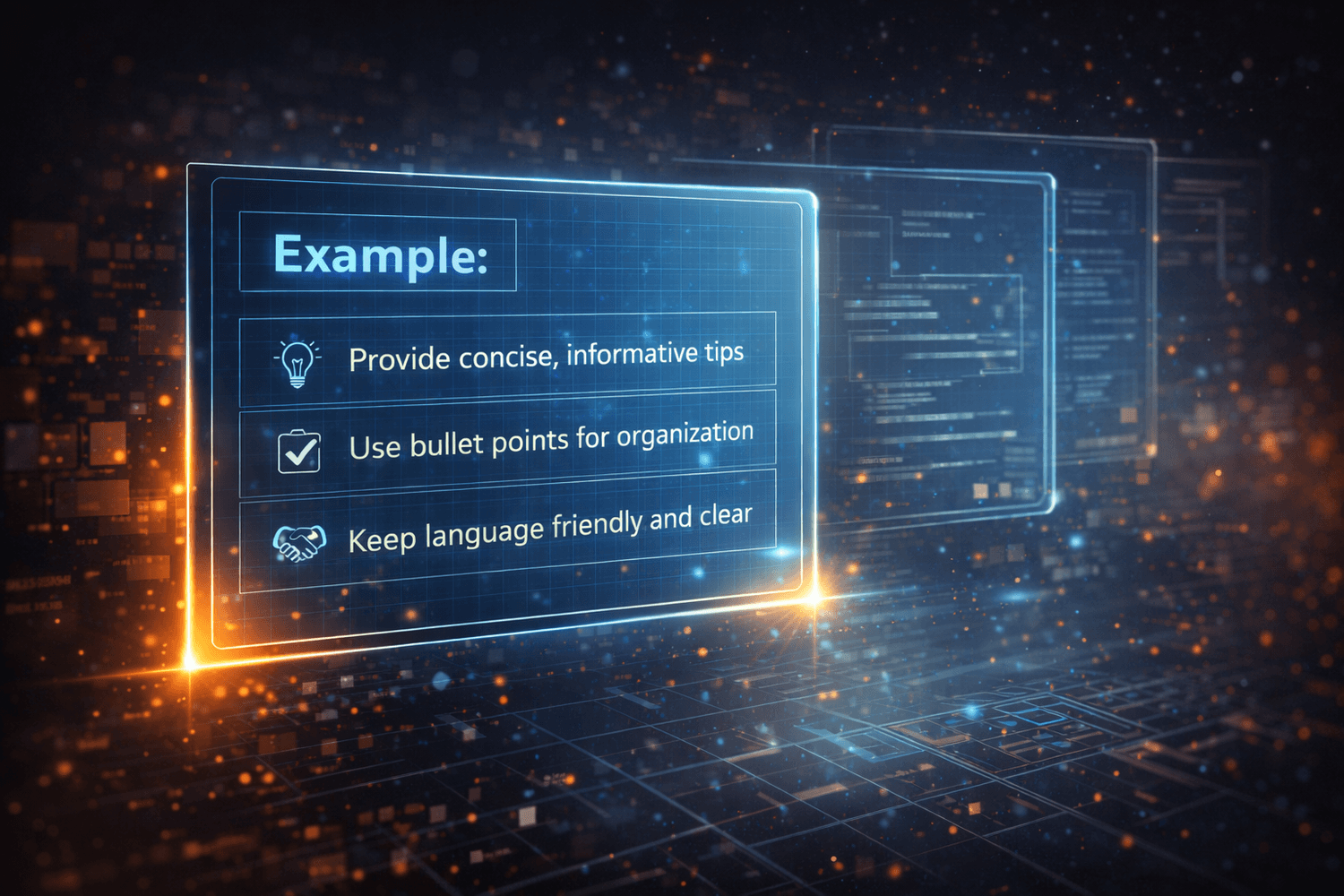
Example based prompting (few shot prompting) teaches models how output should look by demonstration. This method places short examples of desired input/output pairs before asking for new content, effectively training the model in context (MITSloanEdTech, Effective Prompts for AI: The Essentials).
How Examples Shape Output
Few shot prompting gives the model anchor points to follow. When ChatGPT sees a couple of input-output pairs, it learns the format and style you want it to replicate. This reduces guesswork and accelerates usable responses.
Example with Tone and Structure
If you want a list that sounds professional but friendly, show one example that already nails that vibe. The model then has a reference to copy the pattern in your real request, instead of trying to guess tone from vague clues.
Example for Complex Tasks
For structured tasks like tables or multi-section guides, include one sample of the desired layout before the actual prompt. This makes ChatGPT organize content in the same logical blocks you showed, so the final output arrives closer to publish ready quality.
4. Lock Output Structure in the Prompt
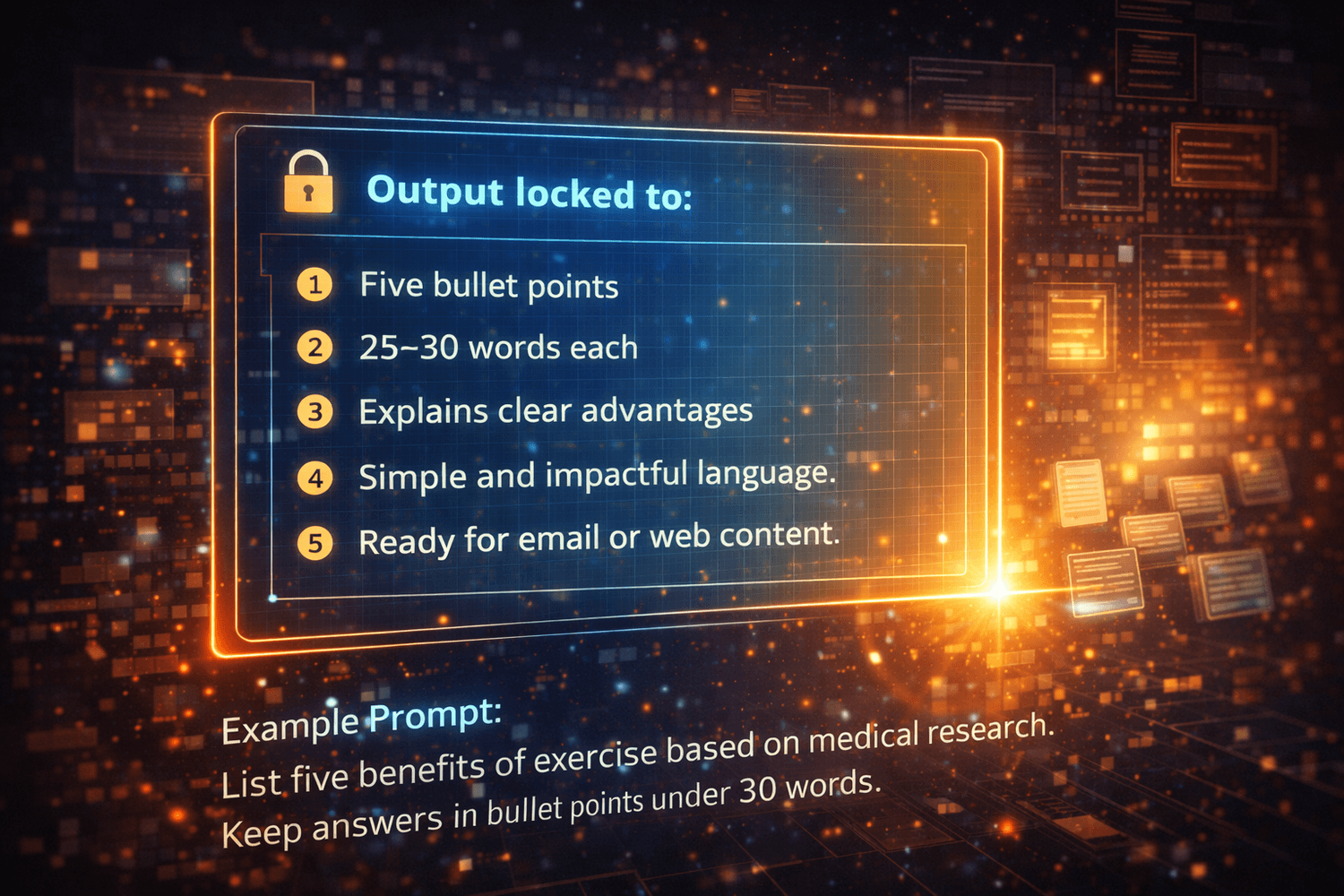
Telling the AI what shape the answer should take matters as much as what content it should include. For example, specifying “five bullets under 30 words each” forces tight responses. Structured prompts like these elevate usefulness for content that must fit real formats such as social captions, code snippets, tables or ready-to-send emails. According to official OpenAI guidance, prompt formats that define desired structure and examples significantly improve the relevance and usability of LLM responses (OpenAI Help, Best practices for prompt engineering with the OpenAI API). This helps you avoid noise and directly collect work ready outputs.
5. Ask for Self Check Before Delivery
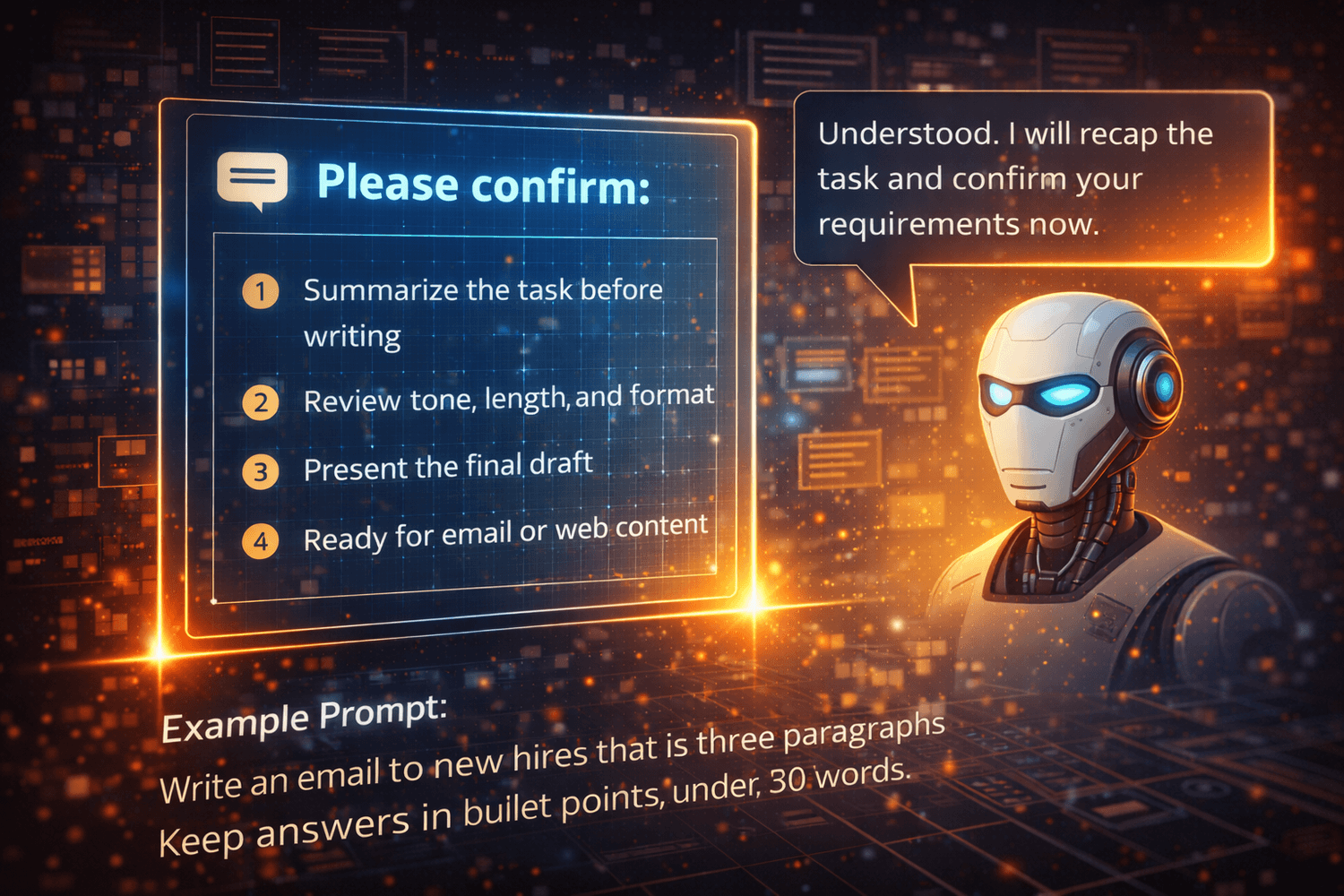
When a prompt asks ChatGPT to summarize context or restate instructions before writing, the model organizes its reasoning first. This step improves alignment and reduces hallucinations because the system confirms what it is about to do before doing it. Structured prompting workflows used in long-form publishing rely on this technique to keep AI outputs consistent and on track (The Money Hacker, August 28, 2025, Running Your Blog with AI?).
How to Apply This in Real Prompts
• Start with a short recap of the task
• Reaffirm constraints like tone, length and format
• Only then request the final draft
This meta step forces clarity before execution. The model follows a confirmed plan instead of drifting, which leads to outputs that match expectations and require fewer revisions.
6. Add a Truth Filter and Constraints
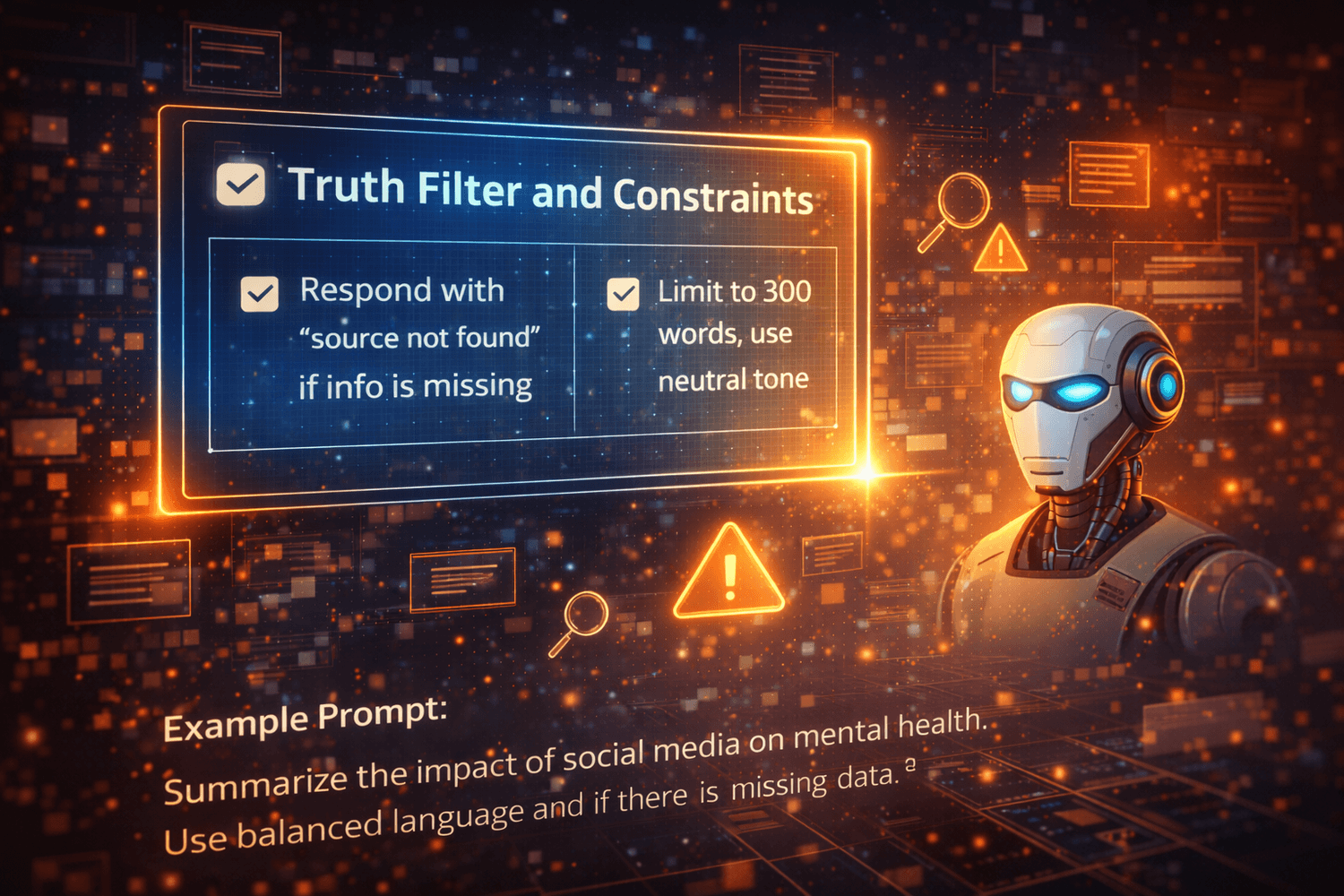
If ChatGPT lacks verified input or evidence, instruct it to acknowledge uncertainty instead of guessing. This truth filter protects accuracy, which is critical for credibility, trust and income driven work. Editorial workflows that focus on human sounding AI outputs emphasize verification as part of prompt design, not a cleanup step (The Money Hacker, August 26, 2025, Humanize Your AI Written Article).
How to Apply This Safeguard
• Ask the model to respond with “source not found” when data is missing
• Add constraints like condition checks, word limits or tone rules
• Keep outputs grounded and reliable
Treat validation as a built in instruction, not an afterthought. This approach strengthens client deliverables and publishing quality while reducing costly errors.
7. Iterate One Variable at a Time
Strong prompts are built through testing, not intuition. Change one element per iteration so the impact stays visible. Adjust tone, insert one example, tighten length or clarify context. This controlled approach isolates what actually improves output quality instead of masking results with multiple changes at once. SEO focused prompt tuning workflows already use this principle to refine structure and relevance (The Money Hacker, August 23, 2025, This Simple ChatGPT Trick Will Boost Your SEO).
Make Iteration Systematic
• Track prompts that perform well
• Save proven formats as templates
• Build a small prompt library for repeat work
This discipline speeds up recurring tasks and improves consistency. Over time, refined prompt libraries become reusable assets that return value through saved time and cleaner deliverables.

Archive Winning Patterns for Reuse
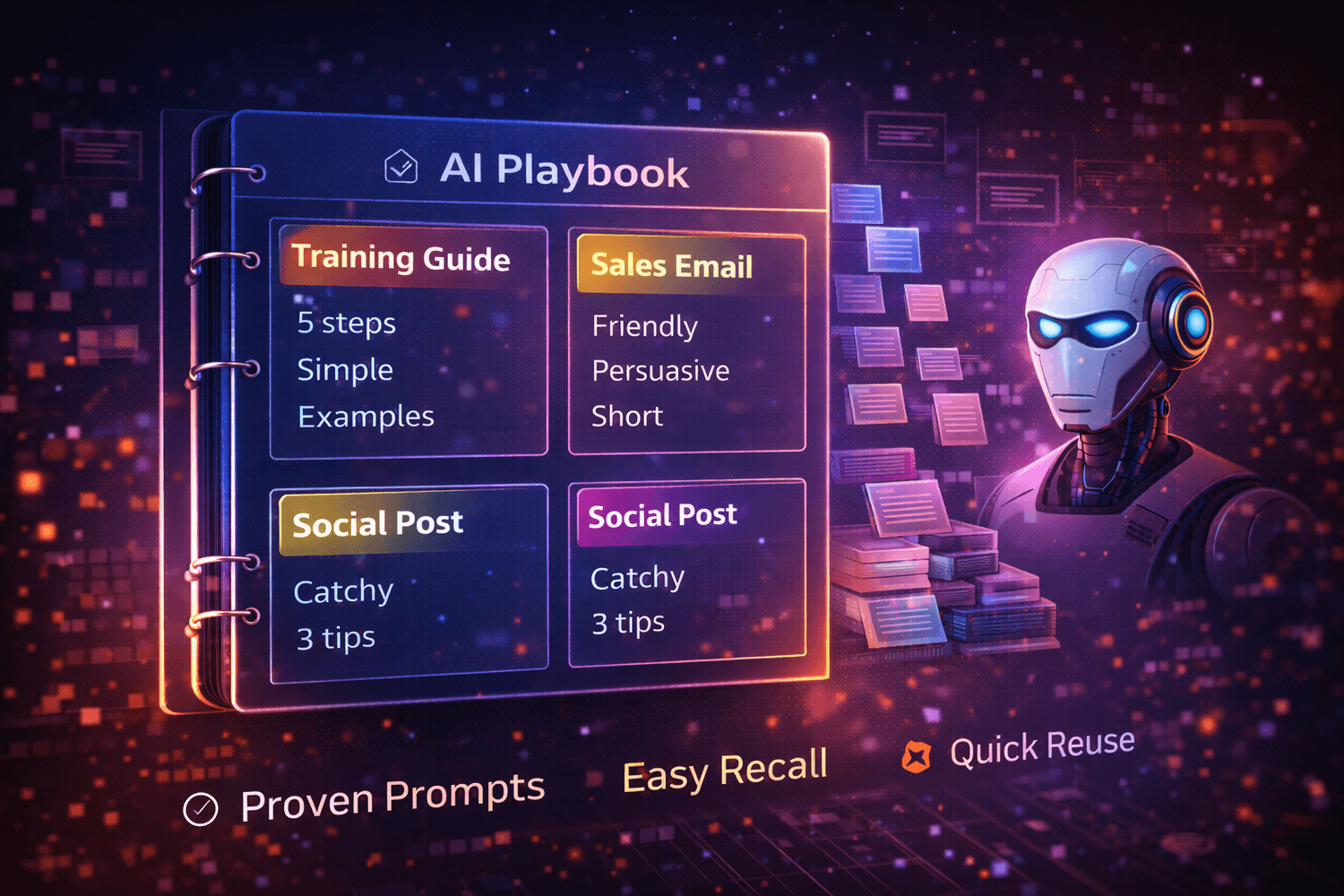
Once a prompt delivers consistent results, treat it like an asset. Proven formats, examples and constraints should be stored in a personal AI playbook so they can be reused instead of rebuilt. Strategic content and ad workflows already rely on repeatable systems rather than improvisation (The Money Hacker, November 21, 2025, Master Ad Strategy to Grow Your Social Media Business).
Turn Prompts into a System
• Store templates with short notes
• Tag each by use case or goal
• Reuse and adapt instead of starting fresh
This practice converts prompt discipline into a long term skill set. It supports business processes, content production and client work at scale while keeping quality consistent and time costs low.
If you want to create and sell ChatGPT created products, then use AI PLR Toolkit + Crazy Bonuses. Here you will get 21 different prompts to create 21 types of PLR products using free AI tools like ChatGPT and Deepseek.
For mastering copywriting and earn maximum money online, you can use tool like 620 ChatGPT Prompts for Copywriting. Using this bot, you will be able to create sales pages, emails & ads in minutes.
In any case, be aware of scams. It can destroy all your good efforts within no time. For identifying scam, you can use Freelance Scam Detector AI. Just drop the project link or post and it will analyze the client, payment terms and contract risks saving you from fake offers and shady deals.
Frequently Asked Questions (FAQ)
Vague prompts force the model to guess intent. Clear outcomes reduce ambiguity and guide structure. Specific direction leads to usable drafts faster.
Naming the final deliverable first creates alignment. Length, format, tone and purpose act as guardrails. The model stops drifting.
Role defines thinking style. Audience sets language level. Together they shape voice, depth and examples from the first sentence.
Examples help during complex or repetitive tasks. One strong sample teaches format and tone. Output quality improves instantly.
Add a truth filter inside the prompt. Instruct the model to admit uncertainty. This prevents confident errors and protects credibility.
Winning prompts become reusable assets. Templates reduce effort on repeat tasks. Consistency improves across projects and clients.
Conclusion
Best results come from prompt discipline, not prompt luck. Set the mission, role, format and boundaries. Feed only relevant context. Add validation rules. Then iterate with one change at a time. This is how ChatGPT becomes consistent instead of chaotic.


The Money Hacker