
4 Best Platforms for New Writers to Make Money in 2026
Choosing the best writing platforms for new writers in 2026 can decide whether writing stays a hobby or becomes income. I know you are juggling coffee fueled nights, full time jobs and the occasional existential crisis. Well, you are not alone. As someone who was once in that position, I know that picking the right platform can mean the difference between side hustle glory and Netflix induced procrastination. So, let’s cut the fluff and dive straight into the 4 top platforms for writers this year.
Substack for Direct Reader Income
Substack is a strong pick when the goal is a direct line to readers. It fits writers who want a home base for ideas, newsletters and serialized writing. This platform is less about chasing reach and more about building loyalty.
1. Why Substack
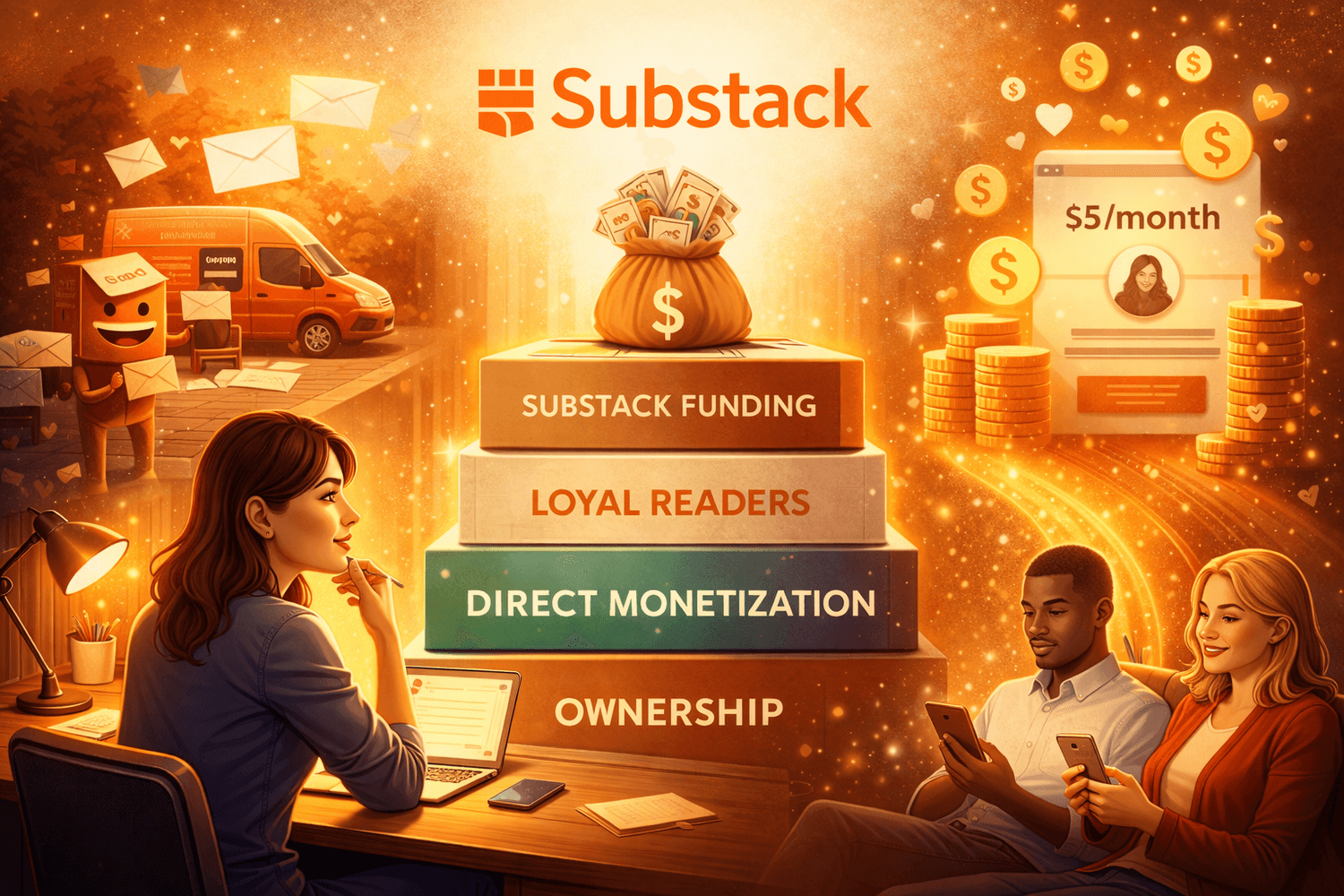
Substack works best for writers who want ownership, stability and a direct relationship with their readers. Instead of chasing reach through algorithms, it helps you build a focused audience that grows with your ideas and supports your work consistently.
a. Huge Funding
Substack’s $100 million funding round and $1.1 billion valuation point to long term intent, not a quick growth stunt (Reuters, July 17, 2025, Newsletter platform Substack valued at $1.1 billion in latest funding round). This level of backing usually translates into better tools, stronger creator payouts and clearer focus. For writers, it signals stability and real commitment to creator income instead of short term hype.
b. Direct Monetization
Substack keeps monetization clean and creator first. Readers pay you directly because they value your work. There is no ads breaking attention, or algorithm throttling reach. Income becomes a reflection of trust and connection, giving writers control over how and when they earn.
c. Community Vibes
Subscriptions happen because readers care, not because a feed pushed your post once. That creates a loyal audience -0engages, responds and sticks around. You are building relationships, not just collecting silent views.
2. How to Start
Start with one theme and one publishing rhythm. A weekly post is enough. Use a clear promise in the newsletter description. Make it obvious why a reader should subscribe today.
Publishing samples first can also help build confidence and clarity. The Money Hacker recommends building visible writing samples to reduce client hesitation and speed up earning (The Money Hacker, January 5, 2026, How New Writers Can Earn $110 a Day with Freelance Writing).
That habit makes Substack easier because the writing engine already exists. The platform becomes a distribution and income layer, not a fresh start.
3. Limitations
a. Growth Is Slow at the Beginning
Substack does not push content aggressively to new readers. Early growth depends on consistency and external sharing. Writers often see slow traction in the first few months, which can test patience.
b. Discovery Depends on You
Unlike social platforms, Substack has limited internal discovery. Most writers need to bring readers from LinkedIn, Medium or personal networks. Distribution effort matters as much as writing quality.
c. Income is Unpredictable in Early Stages
Paid subscriptions usually take time to convert. Many readers follow for weeks or months before paying. This makes early income inconsistent and unsuitable as a quick replacement for a stable salary.
d. Burnout Risk without Clear Boundaries
Because Substack encourages frequent publishing and personal voice, writers can overextend themselves. Without a realistic schedule, pressure to maintain quality and consistency can lead to creative fatigue.

4. Pro Tips
Point you must remember to ensure maximum benefit out of it:
• Try short, punchy posts to grab attention fast
• Build a named series so readers remember you
• Share real opinions to feel human, not scripted
• Write like you talk to earn instant trust
• Show up consistently because rhythm beats length
Medium for Viral Reach
Medium is a strong platform for writers who want reach before revenue. It works well as a discovery engine, especially for new writers without an existing audience. Medium is less about ownership and more about visibility, early feedback and testing ideas in public.
1. Why Medium
Medium works best for writers who want exposure, reader response and proof of audience interest. Instead of building traffic from zero, the platform places writing in front of people already searching for ideas and stories.
a. Easy Entry
Medium removes technical barriers for publishing. Writers do not need hosting, design skills or setup time. This makes it easy for beginners to focus on writing consistency and quality.
b. Algorithm Driven Exposure
Medium distributes stories based on reader behavior and interest signals. A strong article can reach thousands of readers even without followers, making it useful for testing topics and formats quickly.
c. Partner Program Earnings
Medium pays writers through its Partner Program based on member reading time and engagement rather than clicks (Engadget, August 11, 2021, Medium’s Partner Program will start paying writers for subscriber referrals). This model rewards clarity, depth and sustained engagement over flashy headlines.

2. How to Start
Choose one niche and publish regularly for a defined period such as 30 days. Focus on clarity rather than perfection. Use relevant tags so Medium understands who should see your writing.
Medium can work well as a testing ground before committing to newsletters or personal blogs. But be mindful of platform rules and quality standards, because violations can lead to unexpected account issues (The Money Hacker, December 07, 2025, Why My Medium Account Got Suspended in Just 4 Days). This insight highlights the importance of platform compliance and thoughtful engagement.
3. Limitations
a. Ownership is Limited
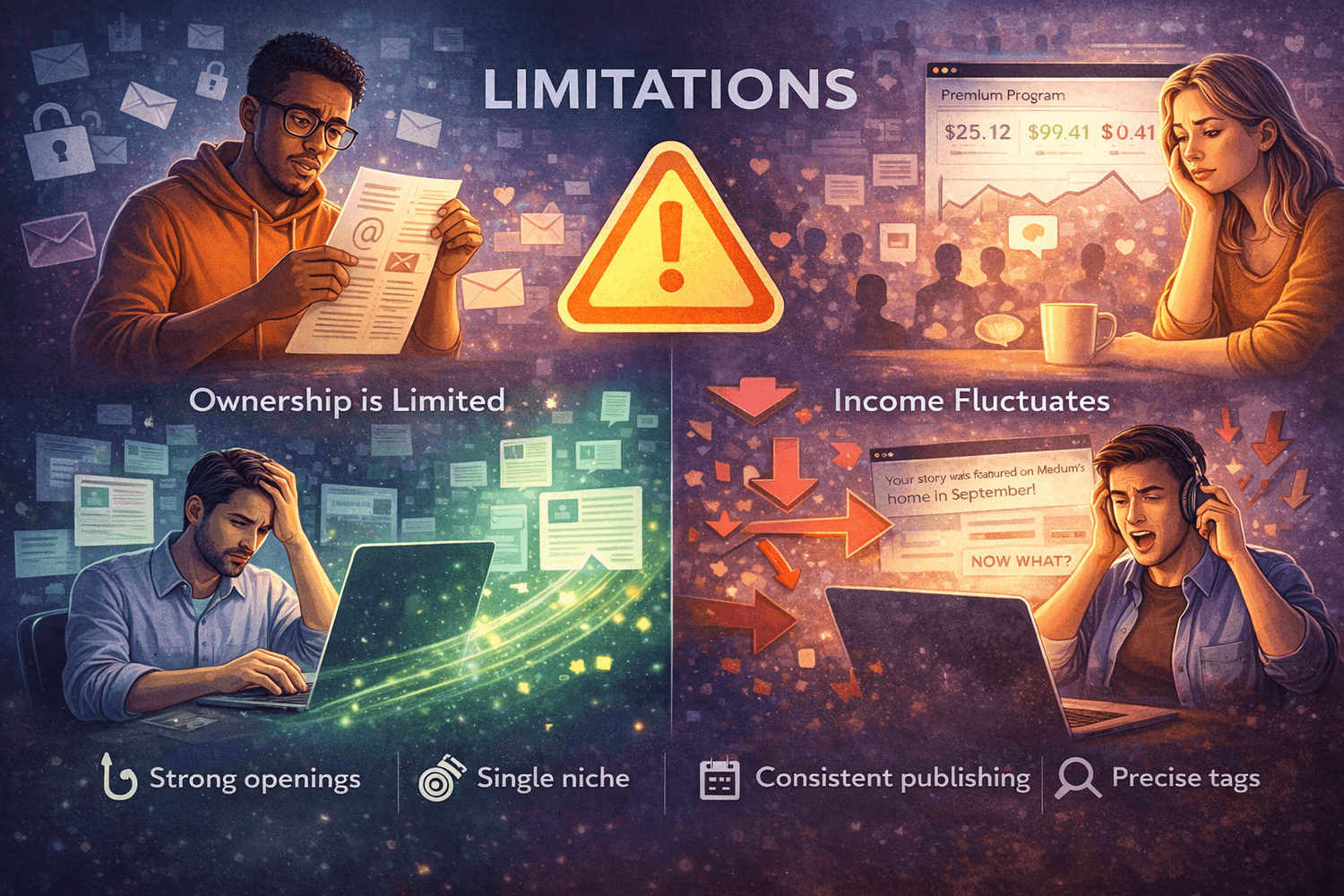
Medium controls distribution and access to reader emails. Writers do not own email lists directly, limiting long term audience control.
b. Income Fluctuates
Partner Program earnings vary month to month. Algorithm changes and member behavior can impact payouts without warning.
c. Competition is High
Medium is crowded with daily publishing. Standing out requires strong openings, clear ideas and consistent quality.
d. Algorithm Changes Affect Reach
Stories that perform well one month may slow down later. Writers should avoid relying on Medium as the only platform.
4. Pro Tips
Point you must remember to ensure maximum benefit out of it:
• Write strong openings that hook readers in the first lines
• Stay within one niche to train the algorithm faster
• Publish consistently to build reader trust
• Use precise tags instead of broad ones
• Repurpose winning stories into newsletters or LinkedIn posts
LinkedIn for Authority
LinkedIn is no longer just a job board. It has become a serious publishing space where writing leads directly to visibility, trust and paid opportunities. This platform works best for writers who want authority and professional outcomes.
1. Why LinkedIn
LinkedIn suits writers who focus on insights, experience and problem solving. Instead of chasing mass reach, it connects writing with people who can act on it, hire for it or pay for it.
a. Professional Audience
LinkedIn readers are professionals, founders and decision makers. They read to learn and apply, not just to scroll. This makes the platform ideal for business writers, consultants and niche experts.
b. Built in Distribution
Writers can share posts directly with their network. Early engagement often comes from connections, which helps content spread further. This reduces the cold start problem new writers face elsewhere.
c. Creator Focus
LinkedIn introduced Creator Mode to support original content and give creators better visibility tools (TechCrunch, March 30, 2021, LinkedIn adds Creator mode, video profiles, and in partnership with Microsoft new career training tools). This shift increased the platform’s focus on content driven growth, making writing more visible across the network.

2. How to Start
Pick one professional theme and write short, insight focused posts consistently. Share lessons from experience, frameworks or observations from your work. Keep posts clear and practical.
LinkedIn works exceptionally well when writing leads to opportunities and income through consults, clients and contracts (The Money Hacker, December 28, 2025, Turn LinkedIn into a Source of Income). This internal insight emphasizes a key benefit of LinkedIn writing and that is to transform visibility into real work without cold outreach.
3. Limitations
a. Writing Must Be Practical
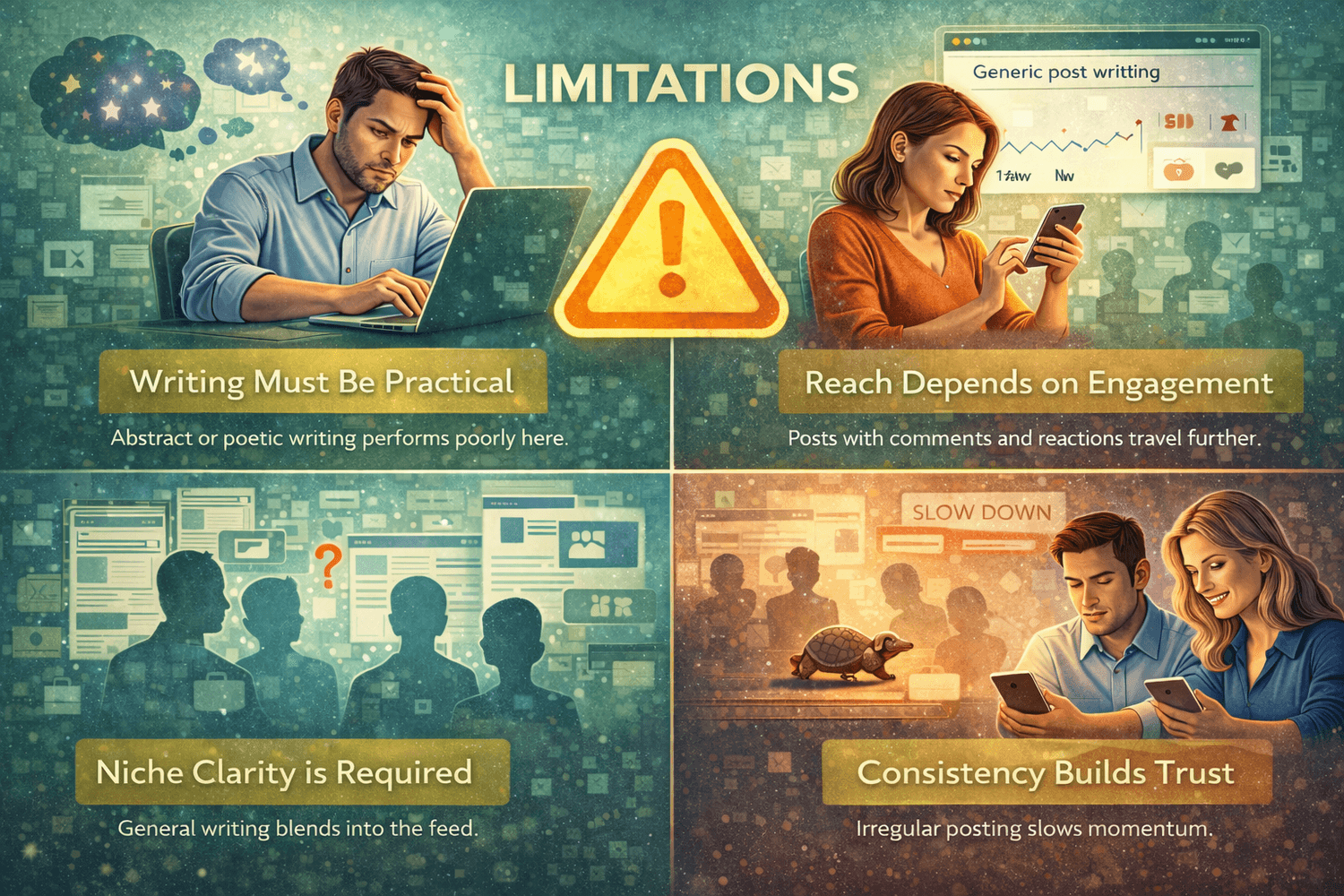
Abstract or poetic writing performs poorly here. Readers expect clarity, relevance and value they can use.
b. Reach Depends on Engagement
Posts with comments and reactions travel further. Writing without interaction can limit visibility.
c. Niche Clarity is Required
General writing blends into the feed. Clear positioning helps readers recognize and follow your voice.
d. Consistency Builds Trust
Irregular posting slows momentum. LinkedIn rewards steady participation over bursts of activity.
4. Pro Tips
Point you must remember to ensure maximum benefit out of it:
• Write in short paragraphs for easy scanning
• Share lessons from real work and experience
• Ask thoughtful questions to invite comments
• Respond to comments for extending reach
• Stay consistent to build authority over time
Patreon for Recurring Support
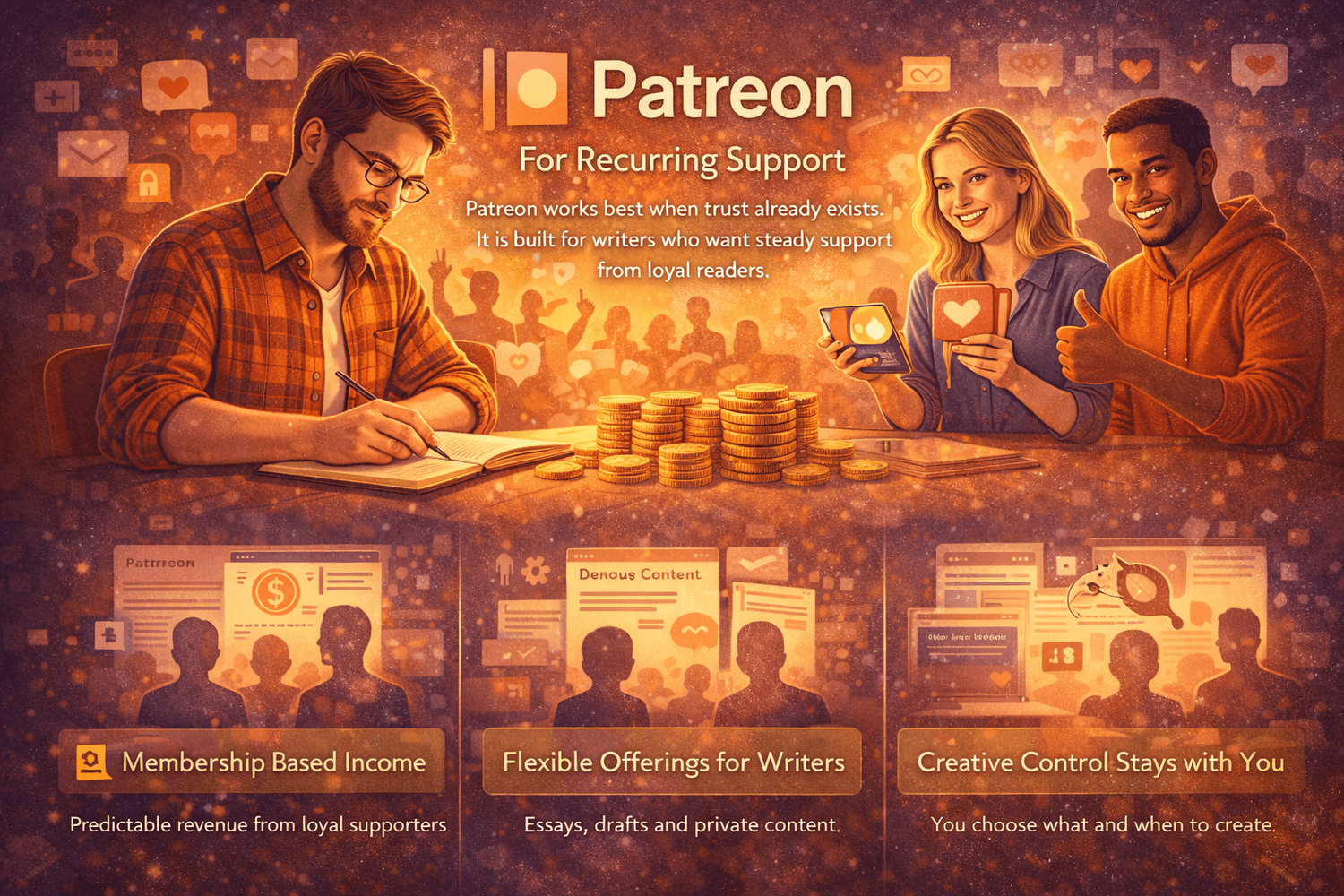
Patreon works best when trust already exists. It is built for writers who want steady support from loyal readers. This platform is less about going viral and more about building stable monthly income.
1. Why Patreon
Patreon suits writers who want recurring revenue without depending on ads. It turns a small group of true fans into monthly supporters.
a. Membership Based Income
Patreon is designed to help creators earn through memberships. This creates predictable income that can support long projects and consistent publishing (TechCrunch, February 12, 2019, The business of Patreon). This structure rewards creators who build trust and keep promises. It also reduces the pressure to chase constant traffic spikes.
b. Flexible Offerings for Writers
Writers can offer bonus essays, early drafts, private posts, Q and A sessions or behind the scenes breakdowns. These perks work because they feel personal and close. Readers pay for access, not just content volume.
c. Creative Control Stays with You
Patreon does not force algorithm friendly content formats. Writers choose what to publish and how often. This protects voice and style, which is the main reason long term supporters stay.
2. How to Start
Start with one tier and one clear promise. Keep the perk simple and easy to deliver every month. A monthly bonus essay is a strong starting point. Early access is also simple.
Patreon works better when supporters feel steady value and consistent presence. The Money Hacker highlights that consistency builds trust long before money arrives (The Money Hacker, December 3, 2025, Making Money Online is a Game, Know How to Play).
This mindset fits Patreon perfectly because membership income grows slowly and rewards reliability.
3. Limitations
a. Discovery is Not Built in
Patreon does not push your work to strangers. It needs a discovery platform like LinkedIn, Medium, Substack or a blog to feed it.
b. Growth Takes Time
Many readers will follow for a long time before paying. The conversion timeline can be slow, especially for new writers.
c. Perks Can Become Pressure
When tier promises become too complex, delivery becomes stressful. This can turn Patreon into a burden instead of support.
d. Retention is the Real Game
Getting a new patron is hard. Keeping them is harder. Retention depends on clear communication and consistent delivery.

4. Pro Tips
Point you must remember to ensure maximum benefit out of it:
• Start with one tier and one simple perk
• Focus on value and closeness, not volume
• Communicate monthly plans so patrons feel included
• Deliver on schedule to protect trust
• Improve retention before adding more tiers
For mastering copywriting and earn maximum money online, you can use tool like 620 ChatGPT Prompts for Copywriting. Using this bot, you will be able to create sales pages, emails & ads in minutes. To equip yourself more, you can join $100K Money Hackers. Here you will get 35 AI tools for just $1/month. And if you want to earn money quickly by any means in online domain, access The Quick $750 Hack.
Frequently Asked Questions (FAQ)
Speed depends on distribution strength and clarity. LinkedIn often converts writing into paid work quicker through clients and contracts.
Substack grows slowly at first. External traffic from social platforms improves early results and reduces frustration.
Medium pays through reading time and engagement. Consistent niche writing improves visibility and monthly earnings.
Patreon offers predictable support from loyal readers. Membership income feels steadier than traffic based models.
Multiple platforms spread risk and expand reach. One source feeds another and stabilizes income flow.
Substack and Patreon reward trust and consistency. Both favor creators building durable reader relationships.
Conclusion
Choosing the best writing platforms for new writers in 2026 is about matching goals with the right ecosystem. Substack, Medium, LinkedIn and Patreon each bring unique strengths to the table. Experiment, measure your results and lean into what works. 2026 is your year to shine. Let’s make it count.


The Money Hacker