
How Serious China is to Win the AI Race
Updated on: Friday, December 12, 2025
China is pushing hard to lead the world in artificial intelligence. The country sees AI as the next big power shift. It aims to dominate this space by 2030. Massive funding and government backed programs make that goal realistic. The question now is whether China can turn that ambition into real global influence.
Bold AI Blueprint
China’s national AI development plan launched in 2017. It sets clear goals to make the nation an AI superpower by 2030. The plan connects universities, research labs and private tech giants. Companies like Baidu, Alibaba and Tencent run national AI labs. Their focus is on language models, robotics and smart automation. This tight coordination between the state and private sector keeps China’s AI engine running at full speed. (The Guardian, December 8 2021, TechScape how China became an AI superpower ready to…)

China Vs the World in the AI Race
China’s path in AI leadership is clear. It has the vision, infrastructure and ambition. The challenges lie in ethics, innovation freedom and global trust. Yet China continues to grow fast. The next decade will test if it can balance control with creativity. Let’s discuss about the comparative scenario.
1. AI Investment Gap
The United States leads in private AI investment. In 2024, total funding reached $109.1 billion. China’s number stood at $9.3 billion. The gap allows the U.S. to power larger research labs and deeper model training. (Stanford HAI, April 18, 2025, Artificial Intelligence Index Report 2025)
2. Model Production and Research Output
In 2024, the U.S. created 40 major AI models. China produced 15 and Europe 3. The difference shows how much faster the U.S. converts research into usable systems. (Stanford HAI, April 18, 2025, Artificial Intelligence Index Report 2025)

3. Governance Edge of Europe
Europe focuses on control and safety. The EU AI Act, active since August 1 2024, sets global standards for ethical AI. It defines risk categories and forces transparency in AI development. (European Commission, August 1 2024, AI Act enters into force)
4. U.S.-China Tension
In March 2024, the U.S. expanded export controls on advanced AI chips and software. It blocked China from buying top training hardware like NVIDIA’s H100 chips. China reacted fast. It began investing in domestic chip design and shared computing clusters to stay independent. (Reuters, March 29 2024, U.S. updates export curbs on AI chips and tools to China)

5. Comparative Summary
The U.S. leads in funding and frontier research. Europe leads in policy and regulation. China leads in adoption and execution speed. Each plays a unique role, but China’s scale gives it unmatched implementation power.
Building AI Backbone Through Infrastructure
China invests heavily in infrastructure to support AI. It is building national data hubs and expanding 5G coverage across cities. These systems connect devices, sensors and services into a shared AI network. China’s smart city projects show how AI can run traffic, energy and healthcare systems. The more connected the nation becomes, the faster its AI can evolve. (Business Insider, September 8, 2024, How China’s Infrastructure Fuels Its AI Revolution)

Opportunities for Stakeholders in AI Landscape
China’s growing AI wave opens new paths for global players.
Freelancers and Digital Creators
Freelancers can use AI tools to produce better content, automate editing and create faster workflows. Chinese AI platforms in writing, translation and design help them scale output with quality.
Entrepreneurs
Founders can launch AI startups in fields like finance, health and transport. China’s tech parks and incubators give them resources and access to funding.
Tech Companies
Foreign companies can partner with Tencent or Baidu to build smart cloud systems or robotics programs. These collaborations create shared growth and global reach.

Investors
The Chinese AI market is a long term growth hub. Investing in AI chips, healthcare AI, and automation startups can bring high returns as national adoption grows.
Governments
Governments can engage China in talks on AI ethics and data safety. Cooperation helps build global norms for responsible AI development.
Consumers
Users everywhere benefit from cheaper and smarter AI services. From personal assistants to diagnostic tools, China’s innovation brings real improvements to everyday life.
Trump-Xi Summit Sparks New Hope for Digital Creators. It means more opportunities are coming surely for freelancers and digital creators.
Future of China in Global AI Race
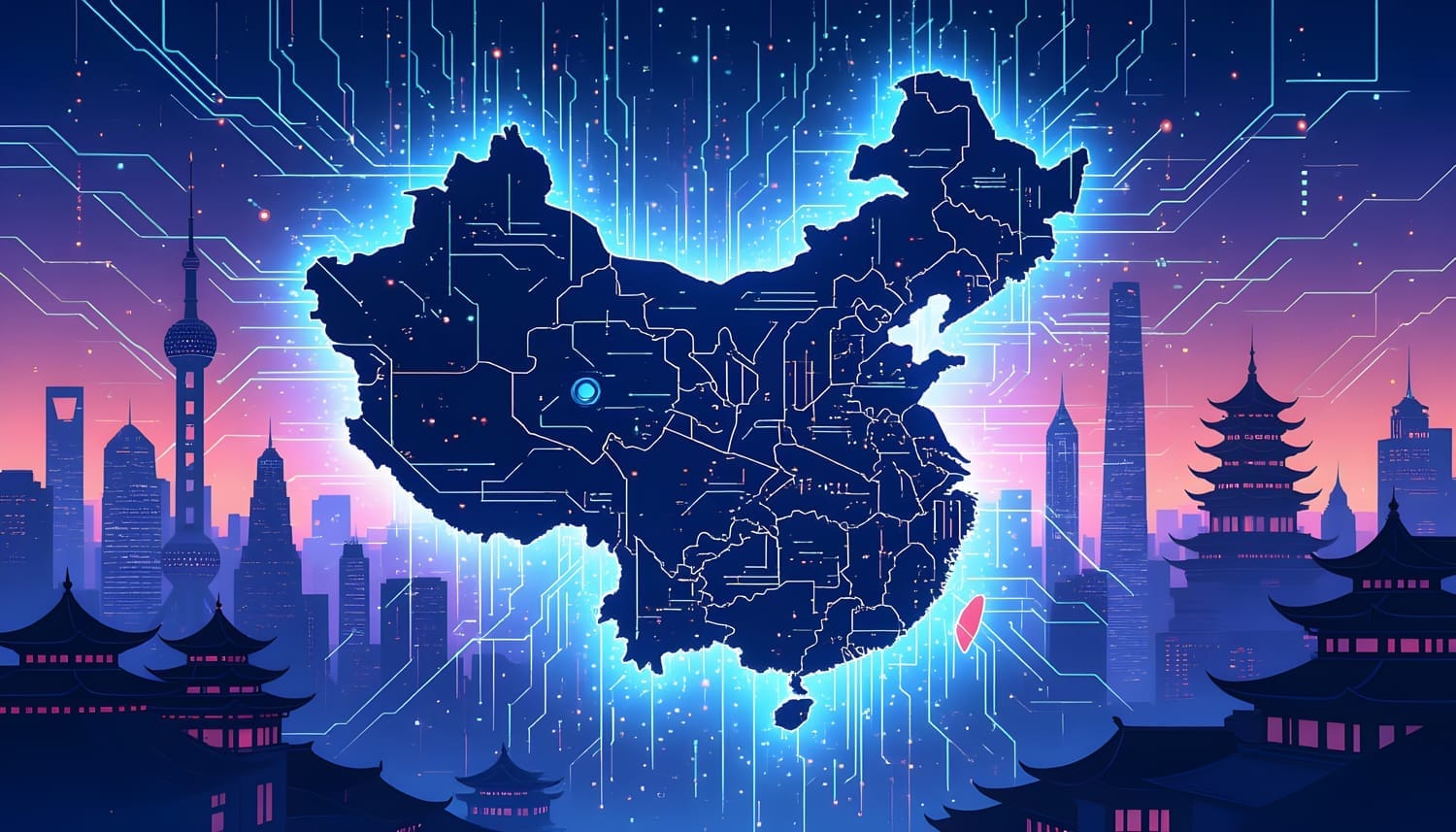
China’s path in AI leadership is clear. It has the vision, infrastructure and ambition. The government treats AI as both an innovation engine and a global strategy. It invests in national computing hubs, AI universities and smart industries that drive constant experimentation. Chinese scientists now publish some of the most cited AI research papers in the world. The country’s edge lies in its ability to scale ideas into daily use, from city traffic systems to e-commerce recommendation engines.
The challenge ahead is finding balance. China must prove it can innovate freely while maintaining ethical standards and global trust. The next decade will show whether its controlled model can keep pace with open innovation. (The Guardian, January 9 2024, In the race for AI supremacy China and the US are travelling on entirely different tracks)
You want to be focused like China? Want to earn money in sustainable way? Try the AI PLR Toolkit + Crazy Bonuses. It gives you 21 ready prompts to create 21 digital products with free AI tools like ChatGPT and Deepseek. You will also learn where to sell, how to grow and how to turn your time into profit.
🎁 Get your copy now and start building your financial independence today.

Frequently Asked Questions (FAQ)
Freelancers can use Chinese AI tools to speed up writing, research and content production. These tools help creators finish work fast and keep quality steady.
Creators get access to cheap tools for editing, design and automation. This helps them scale projects and earn more with less effort.
China builds tools that reach the market fast. These tools open fresh chances in automation, health tech and e commerce. Early users stay ahead.
Small founders can plug into cloud platforms from Chinese tech giants. These systems give them ready tools for testing ideas and building products.
Investors get early access to fast growing sectors like chip design and smart automation. Long term adoption creates strong growth potential.
New tools change how people work in media, finance and tech. Learning these tools keeps workers flexible and ready for better roles.
Conclusion
The question is no longer whether China is serious. It is how far it is willing to go to win. China’s commitment to artificial intelligence is absolute. It blends policy, research and economy into one motion. The nation invests at scale and learns fast. But the final test will be human. Can China lead innovation while keeping trust and fairness alive? The next decade of the AI race will define not only who leads, but who shapes the mind of the future.
If you are keen to put yourself ahead of the race to earn money online, I can suggest you one thing to do. Access The Quick $750 Hack. It is normally of $49 Value. But for readers of The Money Hacker Blog, the discount is 100%! You can learn this easy way to make money as fast as humanly possible. Click here.


The Money Hacker