
Beginner Freelancers Don’t Know This Scam
Updated on: Friday, December 19, 2025
Freelancing has been growing popular by the day. More people are interested in freelancing and joining platforms like Fiverr, Upwork and Freelancer. But a danger lurks in these platforms that most are unaware of.
The Scam
Scam is decades old and yet, many do not have any idea about it. Sometimes before a freelancer provides their service, their clients ask them to deposit money in the client’s so called “Trust Fund.” These clients claim this money will be given back to the freelancer alongside the payment once the service is received. Consumer protection authorities classify this pattern as an advance fee scam, where victims are asked to send money upfront with false promises of reimbursement (Federal Trade Commission, March 15, 2023, Job Scams). If you get any of these offers, run in the other direction.
This is all just a big scam. Tell me something. When you buy something from a shopkeeper, does the shopkeeper give you money to buy their product? Of course not. Similarly, on freelancing platforms, you are the shopkeeper. So why will you pay your clients money? This is just part of a scam. You will never get back the money from their so called, “Trust Fund”.

Why Beginners Fall for This Scam
Most beginners are eager to land their first client and prove themselves. That urgency lowers caution. Scammers exploit this by creating pressure, offering quick approval and promising easy payments. Reports show employment and freelance scams surge by targeting people who are new, inexperienced or unfamiliar with standard payment systems (NKY Tribune, November 2025, Better Business Bureau sees employment scams surge in October — don’t be a victim).
Beginners also tend to trust professional sounding terms like “trust fund” or “security deposit.” These phrases are used to create a false sense of legitimacy. In reality, legitimate freelance platforms already provide escrow and payment protection. Any request for extra deposits is unnecessary and unsafe.

Another reason beginners fall for this scam is its similarity to common hiring fraud. Many hiring scams involve asking applicants to send money for training, equipment or processing fees, even though real employers never charge candidates. Experts warn that any job or freelance opportunity requiring payment is a strong indicator of fraud (CHG Healthcare, April 23, 2024, 7 Signs of a Hiring Scam and How to Protect Yourself).
Common Red Flags You Should Never Ignore
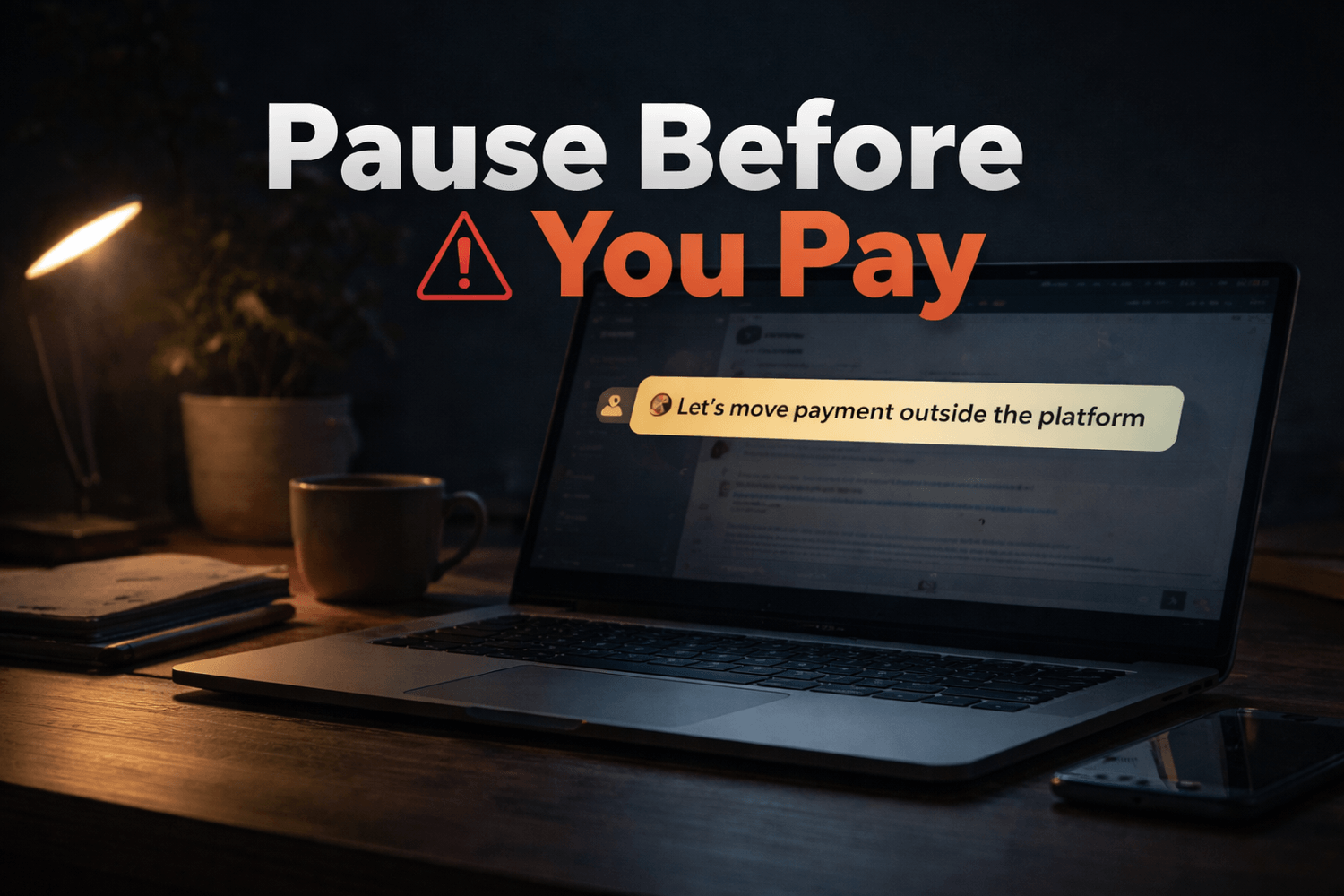
Scammers rarely begin with obvious demands. The warning signs usually appear step by step. One of the biggest red flags is being asked to move communication or payment outside the platform. Legitimate clients stay within platform systems because those systems protect both sides. When someone pushes you off platform early, it is a sign something is wrong.
Another strong red flag is urgency tied to money. Scammers often claim the offer will expire or say payment must be made immediately to secure the job. Real clients do not rush freelancers into financial decisions. Pressure combined with payment requests is a signal to stop, pause and walk away.
Ways to Avoid the Scam
This scam exists, but it does not mean you should quit freelancing. You only need awareness and a few smart habits to stay safe.
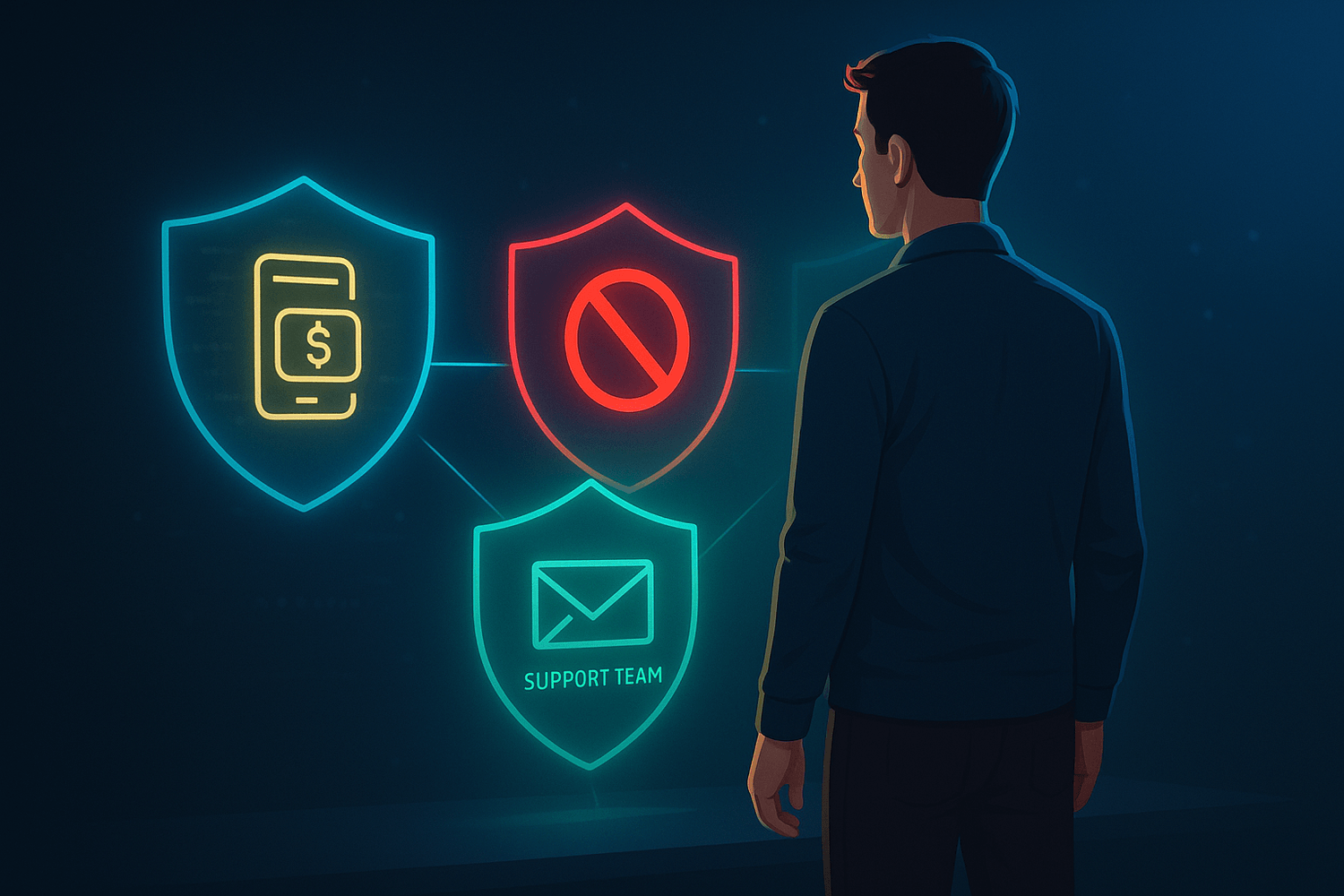
The first and most important step is to keep all payments and communication inside the platform. Freelance marketplaces offer built in protection systems and moving payments outside removes those safeguards. Upwork clearly advises freelancers to stay on platform to avoid fraud and payment loss (Upwork Support, How to Stay Safe on Upwork).
Second, never agree to deposit money to a client. You should not pay to get work. Legitimate clients pay freelancers. Any request that asks you to send money first is a warning sign because scams often involve requests for upfront fees or payments before any real work begins (Scamwatch, Jobs and employment scams).
Third, if you encounter this type of situation, contact the platform support immediately and report the incident. Reporting helps protect you and prevents others from falling into the same trap.
Official Support Contacts:
Fiverr: Click for Support
Upwork: Click for Support
Freelancer: Click for Support
Freelancing Pro Tips
Here are a few proven ways to attract more clients and stand out on crowded freelancing platforms:
Add Free Bonuses to Increase Value
Free bonuses make your offer feel richer without raising the price. Research on consumer psychology shows that offers with added extras are evaluated by buyers as higher value than price reductions alone, even when the economic benefit is the same. Buyers respond more strongly when something extra is included for free rather than when the price is simply lowered (SBI Journal, May 2022, Deal or No Deal: Sales Promotion Influence on Consumer Evaluation of Deal Value and Brand Attitude).
This principle works especially well for freelancers and service providers. A checklist, short guide, quick review or brief audit makes clients feel they are getting more than the core service. Structured offer building methods that increase perceived value without changing price are explained in detail here (The Money Hacker, November 21, 2025, Master Ad Strategy to Grow Your Social Media Business).
Use Testimonials to Build Trust
Testimonials help new clients feel safe. When people see others had a good experience, hesitation drops fast. Studies show consumers trust real user feedback far more than brand messaging or ads (Nielsen, September 2015, Global Trust in Advertising).

Show Clear Examples of Your Work
Examples remove doubt. Clients want proof before they commit. A strong portfolio helps them understand your quality and style without guessing. Hiring data shows profiles with work samples perform better because they lower perceived risk for clients.
Use Viral Hooks to Increase Engagement
Viral hooks work because they trigger emotion and curiosity. Content that creates surprise, usefulness or relevance spreads faster and attracts attention. Academic research confirms emotional triggers play a major role in why people share content online (Journal of Marketing Research, August 2012, What Makes Online Content Viral).
If you want to keep yourself safe and ensure earning maximum money online, join $100K Money Hackers. Here you will get necessary guidelines as well as required tools to ensure your financial freedom. You can also get access to The Quick $750 Hack if you want to make money very quickly in any capacity in the online world.
Frequently Asked Questions (FAQ)
It is when fake clients ask you to deposit money before starting work. They promise to refund it later but disappear after you pay.
Check their profile age, reviews and email domain. Real clients never rush payments or ask for deposits before a project starts.
Always use the platform’s built in payment system like Fiverr or Upwork. It keeps your money secure until your client confirms delivery.
Decline politely and report the user to the platform support team. This prevents your account from being linked to scam activity.
Keep all communication inside the platform. Avoid clicking links or sharing private payment info outside official systems.
Because beginners often lack experience with platform rules. They are easier to trick with fake high paying offers that look professional.
Conclusion
While freelancing, always look out for scams so that you don’t lose any money. To stay safe from any kind of scam, use Freelance Scam Detector AI. Once you find a freelance gig that looks promising, this AI helps you spot scams before they spot you. It will assist you to keep yourself safe from all fake offers and shady deals.
The Money Hacker is always committed to be with you in any of your needs as a freelancer.


The Money Hacker