
Google Ads Search Terms That Unlock Cheap Clicks
Google Ads works best when you know what people actually type. The Search Terms Report shows real queries that lead users to your ad. When you study those phrases, you understand intent and behavior. That insight helps you make better decisions. It improves clicks, tightens spend and thereby it lifts quick positive results. You run a campaign with purpose when you know the language of your audience.
What It Really Shows
The Search Terms Report reveals the exact queries that triggered your ad. (Google Ads Help, May 20 2025, About the Search Terms Report)
People rarely use neat keyword phrases. They type in their own style with emotion and intent. Their language exposes real patterns inside the market. You see how problems appear in natural words. You also observe how solutions enter the search journey. This insight helps build ads that match authentic behavior.
The difference between your keyword list and actual user searches matters. Keywords represent your assumptions. Search terms represent actual needs. (Search Engine Journal, May 29 2024, How To Use The Google Ads Search Terms Report)

When real language becomes visible, campaign structure gains clarity. Ad groups tighten around intent. Copy becomes focused. Relevance grows when content mirrors human behavior. Messages sit close to demand and each move feels guided by honest patterns. This is how search terms grow into competitive insight.
Why Search Terms Reduce Costs Fast
Google Ads Search Terms expose waste early. Many campaigns attract visitors with low intent. Some searches reflect curiosity instead of action. Others carry broad interest without buying motivation. When these patterns appear, early correction protects the budget.
Weak or irrelevant search terms reveal themselves fast through poor performance. Broad curiosity. Irrelevant intent. Early research terms with no commitment. Filtering out those queries via negative-keyword rules saves costs and improves targeting. (Carrot Cake, October 15, 2025, Why Negative Keywords Are Essential for Google Ads Success)

When ads reflect actual search language, relevance rises. Higher relevance improves Quality Score and lowers cost per click (CPC). (KlientBoost, August 13, 2025, 6 Incredible Ways to Decrease CPC Costs) Lower CPC plus strong conversions means more room for wins. The cycle gets efficient because each decision is based on real data and real behavior.
When your ad matches the exact query, the ad platform gives you better relevance. Better relevance ensures lowers cost. Lower cost means more room for profitable clicks. The entire cycle becomes more efficient because you act on real data.
How to Unlock Chapter Clicks
Progress grows when the system follows an ordered rhythm. The next steps reveal how search behavior turns into real advantage.
Step 1: Read the Report Correctly
Open Google Ads and enter the Keywords section
Select Search Terms to view real queries
Check clicks to track interaction
Check conversions to measure action
Check cost to judge efficiency
Study this raw view because nothing is filtered
Note that queries appear without influence from planned keywords
Step 2: Study Patterns in Real Queries
Scan short phrases that reflect intent
Identify words that signal buying interest
Mark queries that show curiosity without action
Separate active behavior from passive interest
Use this split to guide the next strategy move
Step 3: Upgrade Winning Queries
Pick search terms with strong conversions
Add them as exact or phrase match for tighter control
Adjust bids based on performance
Shape ad copy around high intent phrases

Step 4: Block Terms That Hurt Performance
Identify queries with weak action
Add those terms to the negative list
Remove traffic with low value
Improve CPC by raising relevance
Step 5: Build Micro Ad Groups
Group powerful queries into smaller sets
Create copy that matches precise needs
Align landing pages with intent
Strengthen Quality Score through relevance
Step 6: Review the Report Every Week
Track behavior changes across queries
Watch for fresh patterns and rising phrases
Make small corrections for steady gains
Keep the account efficient through regular checks
Benefits of These Steps
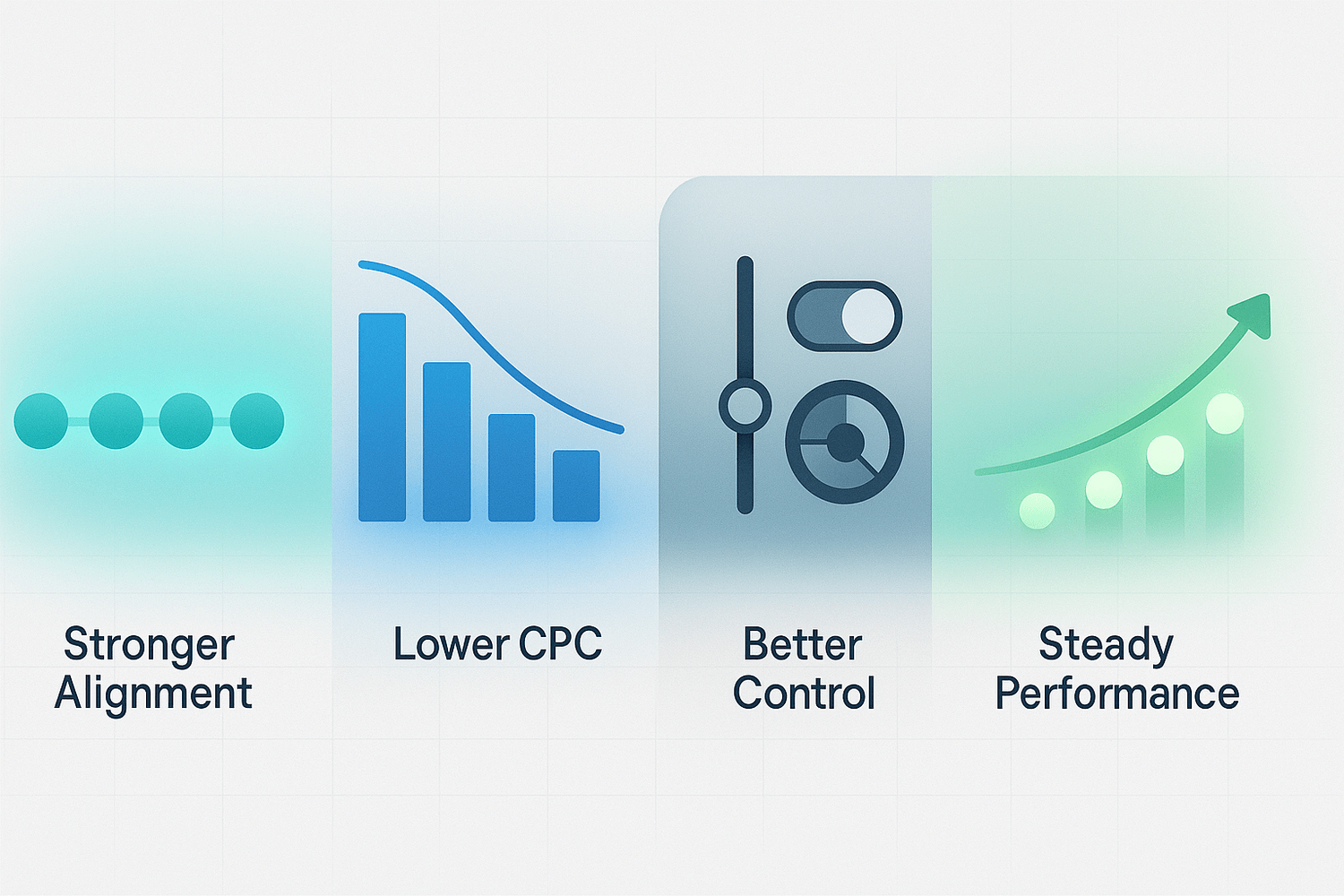
Stronger Alignment
Ads fit real intent. Audiences respond with action. Clicks come from people who feel understood.
Lower CPC
Cost falls when relevance rises. Conversions grow with natural flow. Traffic gains higher quality.
Better Control
Decisions follow data. Spending stays focused on value. Waste leaves the system.
Steady Performance
The account becomes easier to manage. Each insight guides clear movement. Confidence grows through consistent results.
Common Mistakes
Many Google Ads campaigns lose direction when key steps are skipped. Small habits can weaken performance without notice. Budgets rise when intent is unclear. Traffic falls in quality when search behavior is not reviewed. The points below show how these issues form inside real accounts.
Ignoring the Report
Some marketers skip the Search Terms Report and lose vital insight. Blind movement removes clarity and slows progress.
Using Broad Match Alone
Broad match pulls in traffic that carries weak intent. Scattered queries reduce relevance and raise cost.
Skipping Negative Keywords
Harmful terms stay active when negative keywords are missing. Budgets fall under pressure when pointless clicks enter the system.
Mixing Keywords With Search Terms
Keywords reflect planned ideas. Search terms reflect real behavior. Confusing both creates unclear targeting and unstable results.
Not Fixing Patterns Early
Problems grow when action comes late. Regular review brings steady improvement and keeps the account strong.

If you are interested to know about solo ads, read this article: What You Don’t Know About Solo Ads. For generating ads in Facebook and get maximum benefit, you may read this article: How Meta Non Discrimination Policy Impacts Advertisers. Scam is a common issue while generating ads. For identifying scam, you can use Freelance Scam Detector AI. Just drop the project link or post and it will analyze the client, payment terms and contract risks saving you from fake offers and shady deals.
Frequently Asked Questions (FAQ)
Search terms reveal weak queries early. Remove those terms to protect budget. Keep only phrases with clear action.
Real queries show raw behavior. They expose intent in natural words. This helps build ads that match how people think.
High intent phrases raise relevance. Relevance lifts Quality Score. Better scores push CPC down.
Weekly review keeps patterns fresh. This helps avoid waste. It also highlights fast rising phrases.
Add weak queries to the negative list. This filters broad interest and protects spend. Traffic improves once noise leaves.
Micro ad groups focus on tight intent. Copy aligns with clear needs. Landing pages match behavior and lift conversions.
Conclusion
Google Ads Search Terms give you real insight. You watch behavior in raw form. You use that insight to choose winning terms. You build stronger ad groups. You refine copy. You filter waste. You create a smarter system. When you focus on real words from real users your clicks become cheaper and your results get stronger.
For getting assistance regarding this, join $100K Money Hackers to explore yourself more.


The Money Hacker