
Boxing Day, Economy of the Poor and Creator Currency
Boxing Day now feels like shopping frenzy. Sales, returns, online carts and crowded malls define its meaning for many. Yet history reveals a different layer. It began as Offering Day where workers, especially those with the least, received value and acknowledgement in a structured way. Poor households were part of economic relationships, not ignored. That legacy matters because inclusion loosens grip of poverty. Today’s digital economy and creator currency echo that logic at scale. When individuals gain direct access to value creation, roles shift from passive to active and participation becomes a pathway out of structural exclusion.
Boxing Day Origin
Boxing Day historically refers to 26 December in Britain and other Commonwealth nations. In earlier times, employers gave servants and workers boxes containing gifts, bonuses or leftover food as recognition for service around Christmas, signaling value beyond wage labor (History, December 20, 2016, Why Is the Day After Christmas Called ‘Boxing Day’?).
This custom connected labor with material acknowledgement, not pity. Employers recognized that servants and workers contributed to household operations all year and the post-Christmas gifts were a structured way of closing an economic cycle at the margin of festivity and labor. Historical cultural analyses show that these practices reinforced social obligations between classes at a time when formal wage protections did not exist (BBC News, December 24, 2022, Why is it called Boxing Day?).

Informal Economy Before Institutions
Before formal banking and welfare systems existed, survival economics happened through social networks. Shared meals, lending practices, informal trades, barter exchanges and community support kept families afloat when official systems did not exist or were inaccessible. These ways of living were not marginal activities but full fledged economic systems in their own right, rooted in mutual need rather than profit motives. Daily life depended on a falling back into networks of solidarity where value circulated through neighbors, kin and community ties without written contracts.
Shared resource systems worked because societies recognized mutual dependence. Community trust often acted like credit when verification systems did not exist. Reciprocity, reputation and ongoing social ties became de facto currency, enabling people to borrow, lend and exchange labor or goods fluidly. This mirrors modern survival thinking among freelancers and creators, who build economic resilience not through safety nets but by cultivating networks, sustaining demand and planning for volatility as a skill. (The Money Hacker, December 23, 2025, Survival Thinking Freelancers Can Learn from Forefathers’ Day).

Industrial Shift
Industrialization restructured economic agency. Wages replaced shared exchange. Ownership gained power over contribution. Capital accumulated around factories and industrial hubs, pulling value upward instead of circulating locally. Workers depended on fixed income while profits concentrated elsewhere. This narrowed participation for households without assets and weakened informal redistribution systems that once absorbed shocks.
Economic research shows how capitalism intensified income concentration once production scaled beyond local systems. Ownership of capital began to determine outcomes more than labor itself (Cambridge University Press, June 1, 2018, Capitalism and Income Inequality).

Decline of Local Circulation
Before industrial scale, value moved through communities. Labor, food and resources stayed closer to their source. Industrial systems broke that loop. Earnings flowed away from neighborhoods toward centralized ownership. Poor households lost visibility inside the economic story. Participation became transactional instead of relational.
Labor Without Recognition
Factory systems rewarded output, not presence. Contribution became measured in hours and units, not trust or continuity. Workers lost bargaining strength as replacement became easier. Economic identity narrowed into job roles, leaving little space for acknowledgment beyond wages.
Boxing Day Becomes Symbolic
As redistribution weakened, Boxing Day lost its functional role. The practice remained, but meaning shifted. Recognition turned into ritual. Consumption replaced acknowledgment. The day survived in name, yet its circulation logic faded. This change mirrored a broader pattern where growth advanced while inclusion stalled, widening inequality across generations.

Digital Economy Transformed
Digital economy is not just about technology. It is about how value moves. This shift explains why participation now matters more than position and why access has become the real source of income power in modern systems.
Digital Systems Reshape Value
Digital economy describes how digital technologies, internet platforms and data systems reshape production, trade and work. Online marketplaces, platform labor and digital distribution now connect people and services at global scale, changing how value is created and exchanged (TechTarget, October 13, 2023, What Is the Digital Economy?).
Access Becomes Infrastructure
The World Bank frames this shift as structural, not cosmetic. Digital systems open new markets, enable new work models and expand participation when access is real and inclusive. Connectivity becomes an economic gateway rather than a luxury reserved for a few (World Bank, April 10, 2025, Digital Economy).

Culture Turns into Currency
This transformation also redefines value itself. Culture converts into income. Identity turns into signal. Aesthetic becomes influence. The Money Hacker shows how political aesthetics function as currency inside platform ecosystems, shaping visibility and monetization at the same time (The Money Hacker, November 9, 2025, Political Aesthetics Became Currency).
Power Shifts to Creators
Lower barriers redistribute agency. Voices outside legacy power centers gain reach and revenue through attention flows rather than permission. The Money Hacker connects this dynamic to creator opportunity during political moments, where platforms reroute attention and unlock earnings beyond traditional gatekeepers (The Money Hacker, November 30, 2025, How Good Donald Trump is for Digital Creators).
Boxing Day Logic at Scale
At its core, digital economy revives an old idea in modern form. Value moves toward contribution. Access replaces hierarchy. Participation becomes the engine of income, echoing the original logic of Boxing Day at global scale.

Creator Currency Explained
Creator currency means people generate economic value through creativity, attention and community engagement rather than traditional employment. Creative output such as videos, music, writing, education content and entertainment becomes economic input that audiences support directly with money, subscriptions or influence. This fundamentally shifts how work is valued, because income comes from audience engagement and contribution instead of institutional permission.
Market research shows the creator economy is rapidly expanding as monetization tools and platforms scale worldwide. The global creator economy market is projected to grow from its current value toward a much larger economic footprint by the end of the decade as audience support, brand partnerships, digital commerce and platform payouts multiply. (The Business Research Company, October 2025, Content Creator Economy Global Market Report).
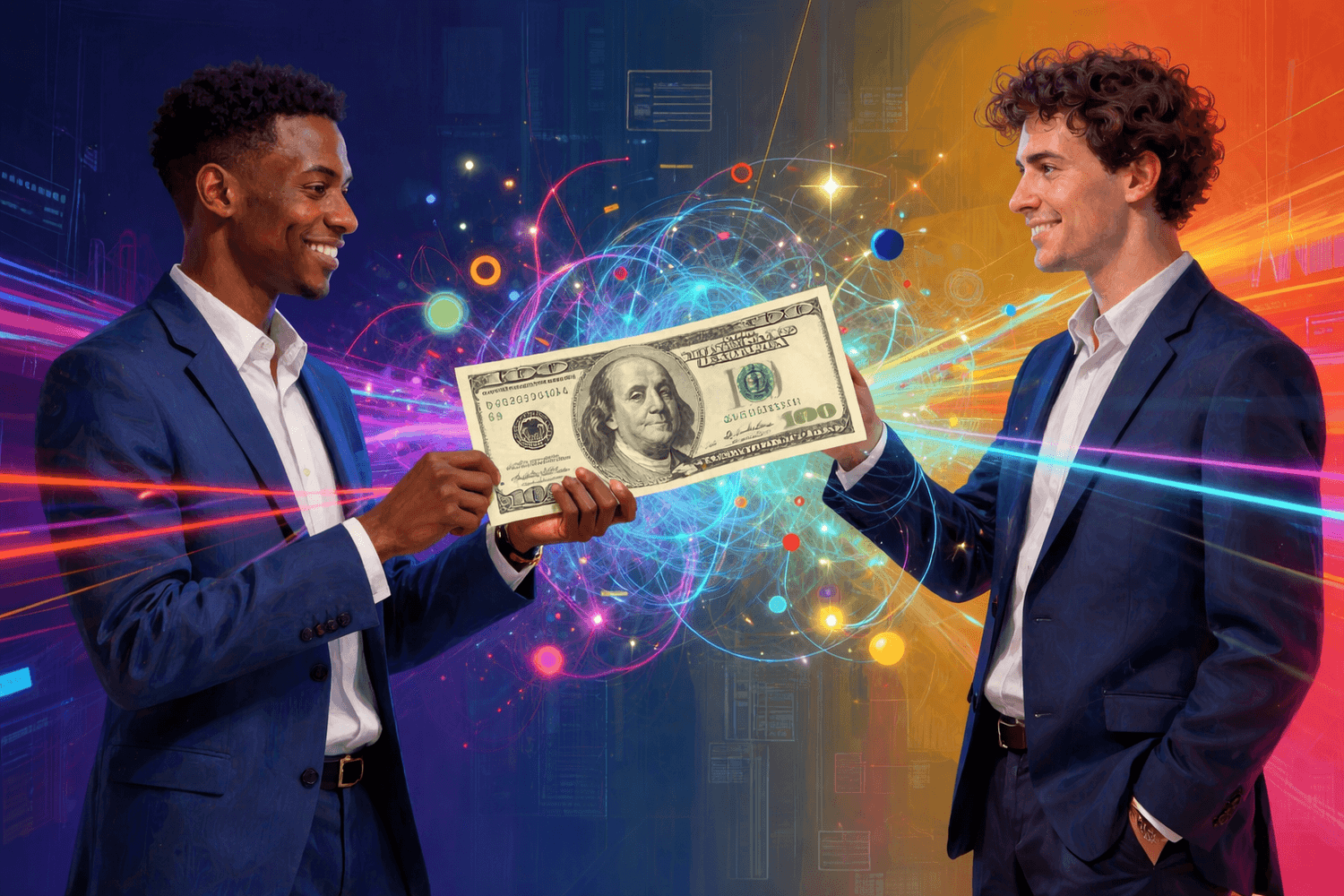
Creator currency reframes value exchange. Attention transforms into income, skill becomes reach and communities become direct economic partners. Individuals no longer wait for job openings. Instead, they build livelihoods through relevance, trust and sustained contribution.
Why Creator Currency Matters
Creator currency matters most for people without traditional capital. With basic tools and internet access, individuals can build audiences, show skills and earn income. Geographic limits weaken. Class barriers soften. Market participation becomes less exclusive. Large financial institutions now recognize this shift as structural, not temporary, projecting creator driven income streams to grow into a massive global market as audiences increasingly support individuals directly (Goldman Sachs, April 19, 2023, The Creator Economy Could Approach Half a Trillion Dollars by 2027).
Economic inclusion expands when people gain direct access to global markets. Talent no longer waits for permission from employers. Skills move faster than borders. This pattern is visible among young workers who choose freelancing and independent digital work over fixed jobs because autonomy, flexibility and global demand offer stronger survival paths than local employment ceilings (The Money Hacker, September 19, 2025, Why Ireland Youths Choosing Freelancing Over 9 to 5).
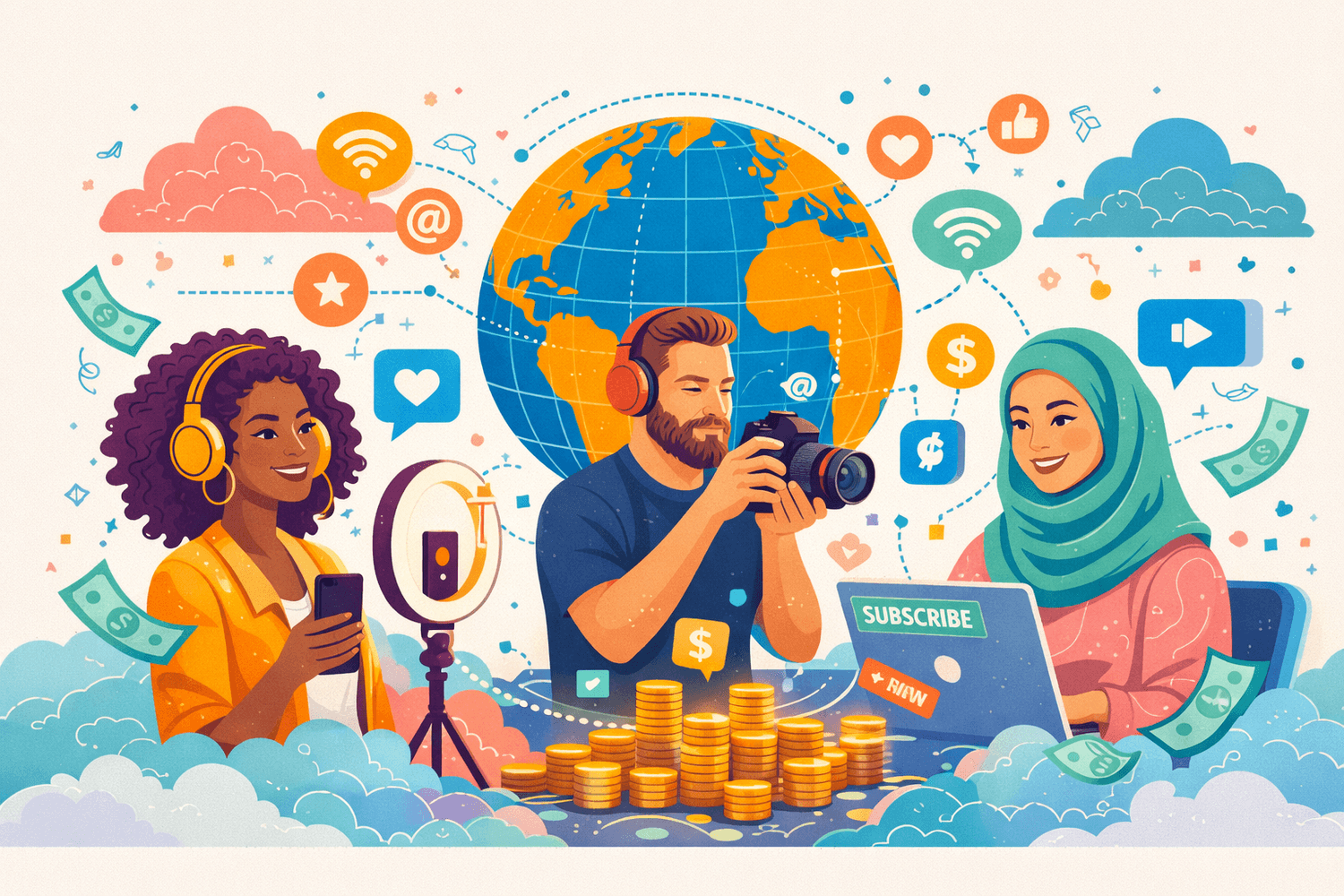
Creator currency also reshapes opportunity across regions connected by digital infrastructure rather than geography alone. Economic tie ups and cross border digital collaboration show how creators benefit when markets open beyond national limits, allowing services, content and skills to travel freely. These shifts signal how digital participation can complement formal economic agreements and widen income access for individuals outside traditional power centers (The Money Hacker, October 30, 2025, Pakistan Saudi Economic Tie Up).
When talent meets tools, barriers shrink. Creative contribution gains measurable economic weight. Creator currency turns participation into income and access into agency, making it a powerful mechanism for reducing structural exclusion.
Toward a World Without Poverty
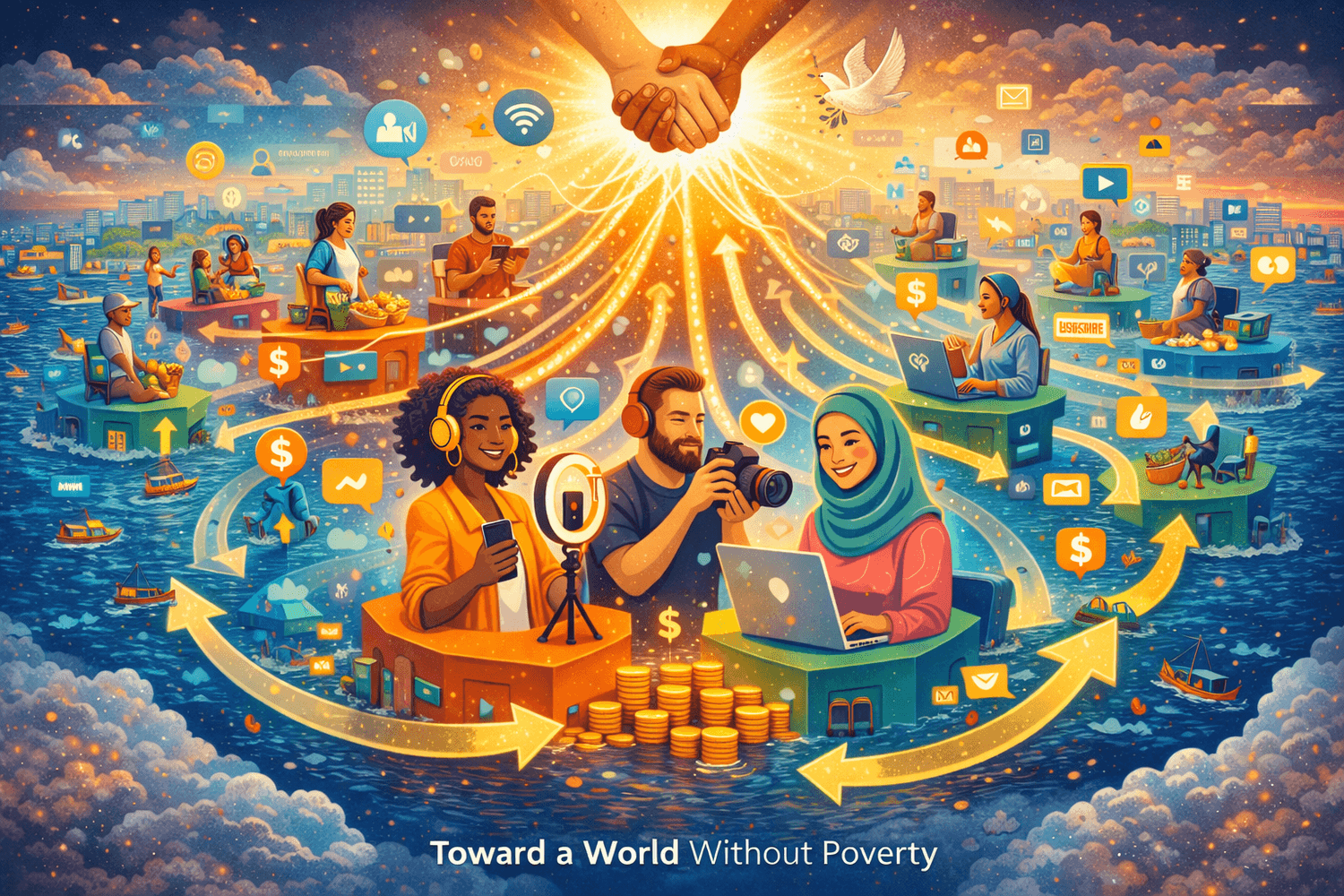
Poverty is rarely about effort. It is about blocked access. When people cannot enter markets, cannot reach buyers or cannot monetize skills, effort stalls. Digital tools change that equation. Global networks and creator platforms allow individuals to produce, distribute and earn without waiting for institutional approval. Economic roles shift once access opens. Contribution becomes visible. Income follows relevance.
Technology alone is not a miracle. Unequal access can widen gaps. But when inclusion is designed into systems, returns compound fast. Low entry costs create high participation. Skills turn into assets. Attention turns into revenue. This is strong ROI economics, not charity logic. Reduce friction, expand access and poverty stops being permanent. It becomes a solvable system problem.
To ensure maximum creator currency earning, you need proper guidelines and tools. For getting maximum benefit, you can join $100K Money Hackers. Here you will get 35 AI tools for just $1/month. They will help you in your online business, dating life, fitness journey, to have fun and so much more! Be with the Skool Community and enjoy your time.
If you want to earn quick money by any means in online domain, , access The Quick $750 Hack. It is completely free for you.
Be aware of scams. It can destroy all your good efforts within no time. For identifying scam, you can use Freelance Scam Detector AI. Just drop the project link or post and it will analyze the client, payment terms and contract risks saving you from fake offers and shady deals.
Frequently Asked Questions (FAQ)
Boxing Day began as value recognition for overlooked labor. Creator economy mirrors this idea through access driven income. Digital platforms restore participation through contribution based earnings.
Creator currency turns skill, attention, trust into income streams. Platforms connect work with audiences directly. Payment flows arrive through subscriptions, sales, partnerships.
Access acts as modern infrastructure. Internet reach opens markets previously blocked. Income grows when barriers drop and visibility rises.
Fixed roles limit growth during volatility. Creator paths allow adaptive earning across cycles. Flexibility builds survival strength through diversified demand.
Poverty links to blocked market entry. Creator systems unlock buyers, tools, scale. Earnings follow relevance once access becomes real.
Consistency builds trust signals. Clear niche focus improves reach. Community engagement sustains long term income.
Conclusion
Boxing Day was not about boxes. It was about redistribution of value toward people whose work mattered but was often invisible. Digital economy and creator currency revive this principle in modern networks. When individuals gain access to tools and audiences, participation replaces passivity. Poverty stops being fate and becomes a challenge that systems can address through inclusion and engagement. Creator currency does not erase struggle, but it changes the terms on which people engage with work and opportunity.


The Money Hacker