
Check These 11 Side Hustles Before Launching in 2026
Side hustles fail today not because effort is missing, but because the market changed. Platforms are crowded. Automation replaced entry level work. What once rewarded effort now rewards skill, positioning and timing. Many side hustles still earn money for experts, yet drain beginners with low pay and high competition. Before trying to make money online in 2026, the real question is simple. Which online side hustles still offer a fair return on your time.
1. Survey Sites
Online survey platforms still attract beginners because they promise fast money without skills. The idea sounds simple. Share opinions. Get paid. But in 2026, surveys function more like filler income than a real side hustle.
Why Surveys No Longer Scale
Survey platforms once paid better because panels were smaller and demand was higher. That balance flipped. Most surveys now offer low payouts and strict qualification filters, which means users spend more time getting rejected than earning. Even when approved, rewards are small and withdrawal limits slow access to cash (Yahoo Finance, April 18, 2024, Can You Really Make Good Money by Doing Surveys?).
Why Beginners Lose Time
Beginners often underestimate how limited surveys are as an income path.
Screen outs are frequent and unpredictable
Payouts rarely justify time spent
No skill or asset is built for future earning
Income does not increase with effort
Money Hacker lists survey platforms as quick starter options, not long term income engines, reinforcing that surveys should only be used for temporary cash needs, not growth (The Money Hacker, January 05, 2026, Free Stuffs to Earn Money Online).
Surveys can help cover small expenses, but treating them as a serious side hustle in 2026 limits progress and earning potential.

2. Pay Per Click Schemes
Pay per click (PPC) schemes once attracted beginners because they promised money for simple actions. Click an ad. Complete a task. Earn instantly. For a short time, this worked because advertisers lacked strong tracking systems.
Why PPC Schemes Collapsed
These platforms stopped paying well once ad networks improved traffic quality detection. Low intent clicks bring no real value to advertisers, so payouts dropped fast. Most PPC schemes now cap earnings or quietly reduce rewards, making effort feel pointless. The market shifted from volume clicks to measurable results and conversions.
Why Beginners Lose Now
Beginners assume effort equals income, but PPC schemes reward neither skill nor strategy.
Earnings shrink as platforms tighten controls
Accounts face limits or silent bans
No pricing power or growth path exists
Time spent does not build marketing skill
Money Hacker explains how real paid traffic works through intent, targeting and trust, not blind clicks, especially when discussing solo ads and traffic quality (The Money Hacker, November 20, 2025, What You Do Not Know About Solo Ads). Beginners chasing click payouts miss the real lesson of paid traffic economics.
PPC schemes look simple, but in 2026 they drain time without teaching the skills needed to run profitable campaigns.

3. Dropshipping
Dropshipping once worked because entry barriers were low. Anyone could launch a store without inventory, list trending products and use ads to drive quick sales. For beginners, it felt like a shortcut into e-commerce.
Why Dropshipping Stopped Being Beginner Friendly
The model weakened as competition exploded and advertising costs climbed. Thousands of stores now sell the same products using similar ads. Shipping delays and refund disputes also hurt customer trust. The market shifted toward brands with clear positioning, faster fulfillment and better support. Generic stores struggle to convert traffic profitably.
Why Beginners Lose Now
Beginners often enter dropshipping without differentiation or capital depth.
Ad costs rise faster than profit margins
Customers distrust unknown stores
Refunds and disputes eat revenue
Copycat products remove pricing control
Profitable dropshipping today requires product research, branding, supplier control and long term strategy rather than quick launch tactics (The Money Hacker, November 19, 2025, Dropshipping Blueprint for Profit). Without these foundations, beginners burn money before learning what actually drives e-commerce success.
Dropshipping still works for skilled operators, but as a beginner side hustle in 2026, it is far riskier than it appears.

4. Selling eBooks
Selling eBooks once worked because digital publishing was rare and demand was high. Early creators could publish quickly, rank in marketplaces and earn without large marketing budgets. For beginners, the model looked simple and scalable.
Why eBooks Stopped Being Reliable
The market changed as publishing became easy for everyone. Free content now covers most popular topics. Readers expect proof of value before buying. Search and store algorithms favor authors with traffic, reviews and authority. New publishers struggle to get visibility without promotion.
Why Beginners Lose Now
Beginners often believe the product alone will sell.
Too many competing books reduce discovery
No audience exists at launch
Free alternatives lower price tolerance
Marketing skills matter more than writing
Money Hacker shows that high earning eBooks usually work as part of a larger system, such as funnels or authority building, not as standalone products (The Money Hacker, September 11, 2025, One eBook 10000 Dollar Earning).
Well written eBooks still earn in 2026, but only when paired with distribution, trust and a clear buyer journey.

5. Stock Photo Websites
Stock photo websites once worked because businesses needed quick visuals and contributor supply was limited. Contributors could upload consistently, get repeated downloads and see small royalties stack up over time.
Why Stock Photos Stopped Paying Well
The market flipped because supply exploded. Smartphone cameras made high quality images common and libraries became flooded with similar content. Buyers also started valuing authenticity over staged visuals. Generic stock images can weaken branding and feel unnatural to audiences (Business.com, July 24, 2025, The Truth Behind Stock Photos: What Works and What Doesn’t). This pushes demand toward unique, brand specific imagery instead of generic libraries.
Why Beginners Lose Now
Beginners usually upload broad, common photos and expect passive income.
Oversupply makes discovery difficult
Royalties stay small and inconsistent
Generic photos get buried fast
Earnings rarely increase with effort
Professional photographers can still earn when they target niche commercial needs and produce specific sets businesses actually want. Without a niche strategy, stock photo uploading in 2026 is a slow grind with limited upside.

6. Coupon Blogging
Coupon blogging once worked because people manually searched for discount codes before buying. Independent bloggers could capture search traffic, list deals and earn affiliate commissions with relatively simple posts. It was accessible to beginners without expensive tools.
Why Coupon Blogging Stopped Working
The market flipped as deal discovery tools and large aggregator sites took over. Consumers now rely on automated coupon finders and big networks that blend savings into checkout experiences. Coupon blogs struggle to compete because search engines reward high authority sites and dynamic deal platforms, leaving small blogs with little visibility and traffic (GreenGeeks, How to Start a Coupon Blog and Actually Make Money). As a result, individual deal posts get buried.
Why Beginners Lose Now
Beginners often treat coupon blogging like a quick content play.
Authority domains outrank new blogs
Affiliate commissions are thin and unstable
Manual deal curation provides limited unique value
Traffic does not grow organically
Today, coupon blogging rarely builds momentum for a sustainable side hustle unless it evolves into broader content that helps users with decisions beyond savings. Beginners who focus only on sharing discount codes find it hard to grow meaningful readership or income.

7. Online Data Entry
Online data entry once worked because businesses relied heavily on manual input for records, forms and databases. Companies outsourced this repetitive work to cut costs and beginners could earn without prior skills or training.
Why Online Data Entry Stopped Working
The model weakened as automation tools replaced routine typing tasks. Optical character recognition, form automation and AI driven systems now process data faster and with fewer errors than humans. The U.S. Bureau of Labor Statistics lists data entry positions among the fastest declining occupations, showing how demand continues to shrink as technology advances (U.S. Bureau of Labor Statistics, August 28, 2025, Fastest Declining Occupations).
Businesses now prefer systems over people for this work.
Why Beginners Lose Now
Beginners enter data entry expecting steady remote income.
Job availability continues to decline
Pay rates remain low and inconsistent
Speed expectations reduce effective earnings
Skills gained do not transfer to higher roles
In 2026, online data entry offers little growth and limited stability. Beginners who rely on it often get stuck chasing low paying tasks instead of building skills that increase long term earning potential.

8. Virtual Assistant Gigs
Virtual assistant work once grew fast because small businesses needed remote help and few people offered services online. Beginners could handle emails, scheduling and basic admin tasks and earn consistent hourly income.
Why Virtual Assistant Work Changed
The model weakened as platforms filled with general virtual assistants offering the same services. Businesses now compare hundreds of similar profiles and push rates down. At the same time, automation tools replaced many basic admin tasks. The market shifted toward outcome based roles rather than task based help.
Why Beginners Lose Now
Beginners enter the market as generalists and compete only on price.
Too many assistants offer the same services
Clients expect speed and results, not availability
Basic tasks are automated or bundled into tools
Income stays flat even with more hours
Virtual assistant work still pays when tied to a specific system, platform or industry. Without specialization, beginners get trapped doing low value work with no pricing power or long term growth.

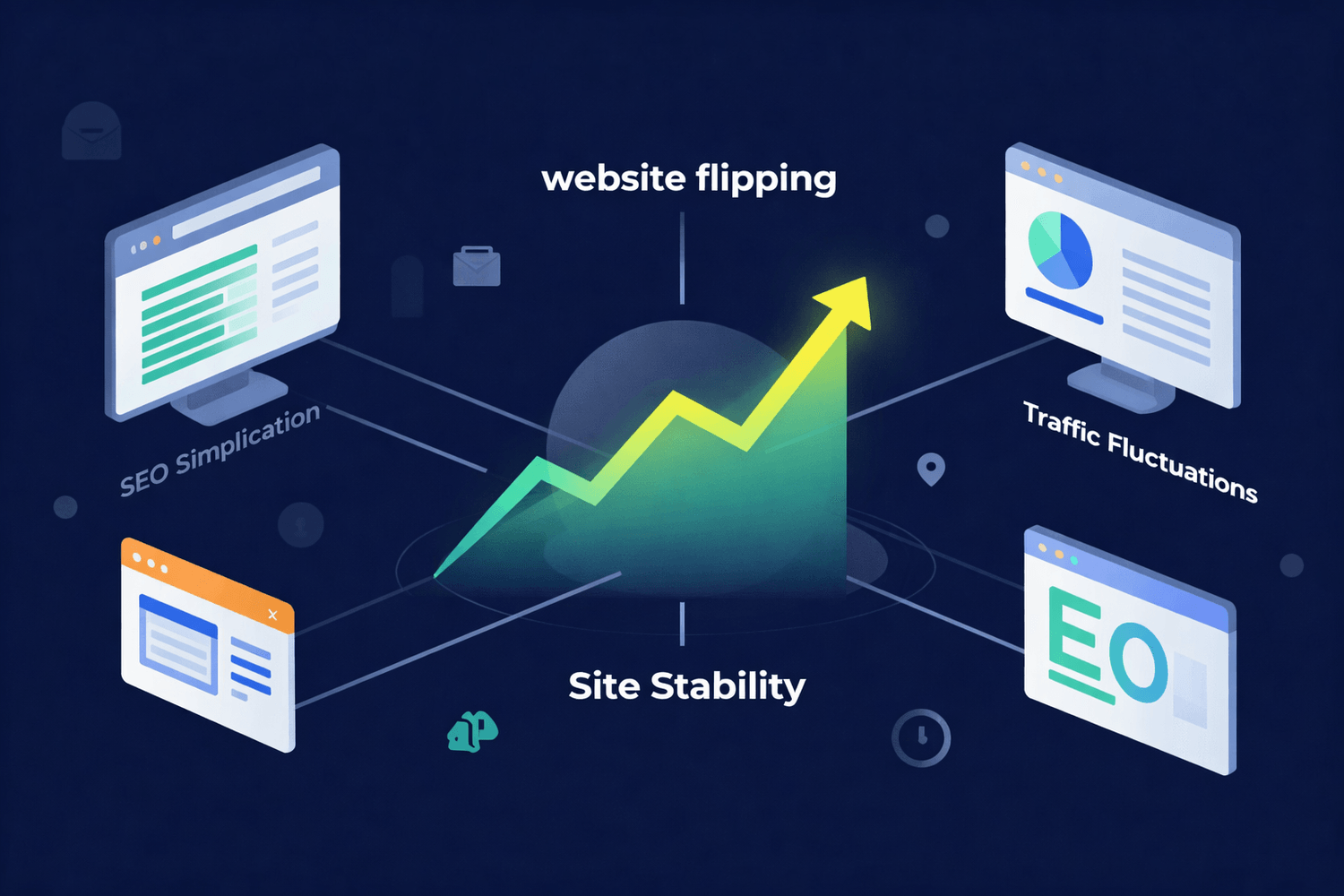
9. Flipping Websites
Website flipping once worked because small sites were cheap, SEO was simpler and buyers paid for any site that showed basic traffic and revenue. Beginners could buy a weak site, improve it fast, then resell for a profit.
Why Website Flipping Got Harder
The market changed because buyers now demand stability, clean traffic sources and solid infrastructure. Hosting and performance also matter more than beginners expect. A site that loads slowly or crashes loses rankings and trust, which hurts valuation. Money Hacker explains how hosting choices affect a new blog’s performance and reliability, which directly impacts long term site value (The Money Hacker, September 22, 2025, Cloud Hosting vs Web Hosting for Starting a Blog). Buyers notice these fundamentals during due diligence.
Why Beginners Lose Now
Beginners often treat flipping like a quick makeover job, but the risks are deeper.
Good sites cost more than beginners budget
Weak sites need real SEO and content skill
Traffic can drop after algorithm updates
Poor site setup lowers resale value
Website flipping still works for skilled operators who can grow traffic, improve monetization and strengthen fundamentals. For beginners in 2026, it is closer to investing than a simple side hustle.
10. Online Tutoring for Basic Subjects
Online tutoring once worked because students needed flexible help outside school hours and class sizes were large. Tutors with modest credentials could earn good hourly rates by explaining concepts one on one. For beginners, basic subject tutoring looked like a low barrier remote income path.
Why Tutoring for Basic Subjects Slowed
The model weakened as AI learning platforms improved and on demand alternatives emerged. Students now turn to AI tools that deliver instant explanations, practice problems and personalized feedback for a fraction of personalized tutoring costs. Recent research shows that online tutoring platforms face pressure from AI tools that replace or supplement routine tutoring in subjects like math, science and reading (Mordor Intelligence, June 16, 2025, Online Tutoring Market: Growth, Trends, COVID-19 Impact, and Forecasts).
These shifts reduce beginner tutors’ ability to compete on price and convenience.
Why Beginners Lose Now
Beginners offering generic tutoring for basic subjects encounter several challenges:
Students choose cheaper or instantaneous AI help
Platforms favor tutors with advanced credentials
Basic topics are increasingly covered by free or low cost tools
There is no clear path to raising rates without specialization
Online tutoring still thrives when tied to advanced skills, certifications, test preparation or niche subject mastery. Beginners who focus only on basic subjects find it harder to build sustainable income in 2026 because the market now expects personalized expertise or outcomes beyond what generic tutors can offer.

11. Micro Task Websites
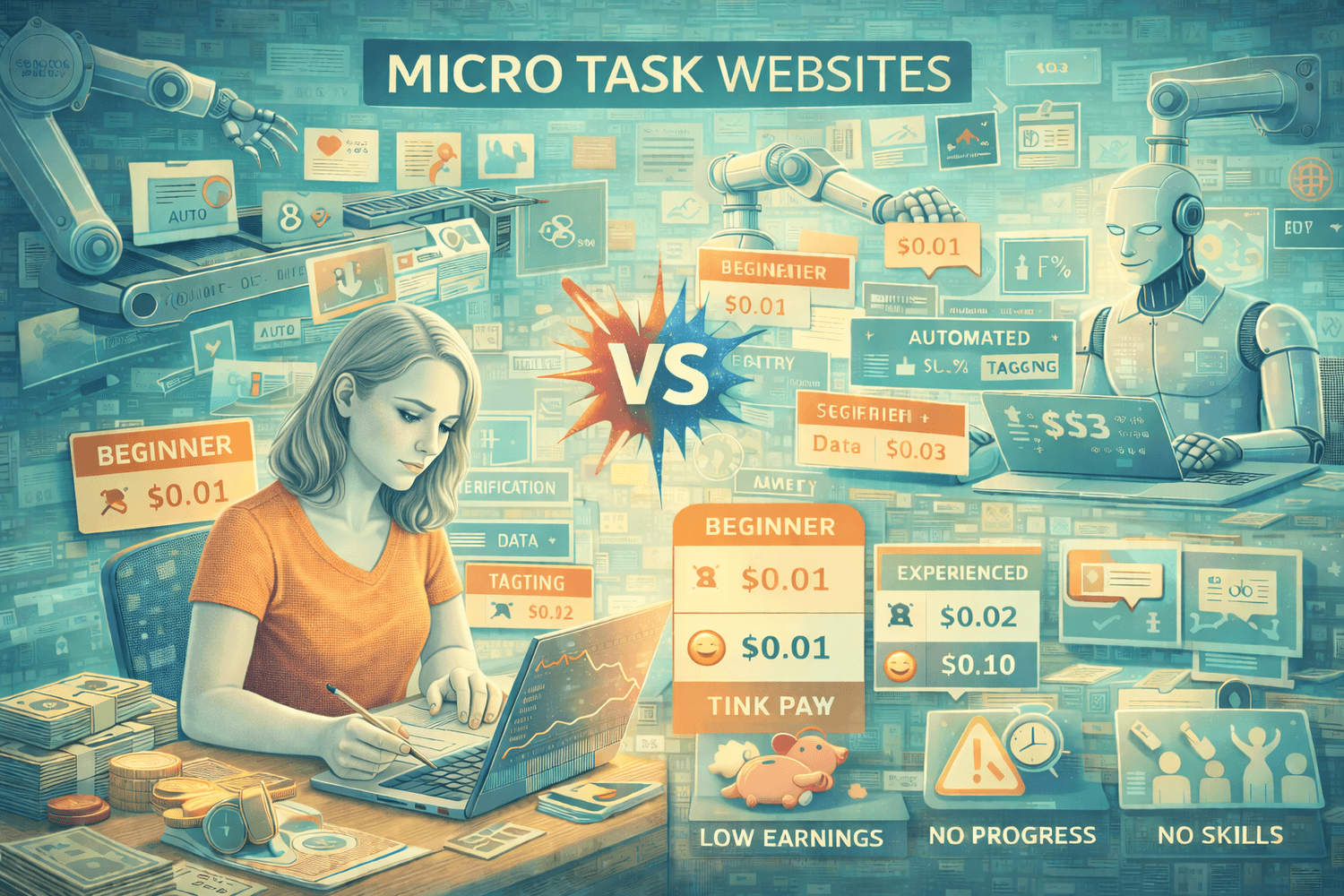
Micro task websites once worked because companies needed cheap human reviews, simple tagging and small actions that machines could not reliably do. Platforms like Amazon Mechanical Turk offered many tiny tasks that, when combined, delivered a modest stream of income for persistent workers.
Why Micro Task Income Faded
The model slowed as competition increased and payouts stayed tiny. Platforms sort tasks so that the most experienced workers get the better paying ones, leaving beginners with the lowest reward tasks. At the same time, automation and improved AI algorithms now handle many simple tasks that once required humans. This shift squeezed opportunity and reduced average earnings for casual participants.
Why Beginners Lose Now
Beginners often enter micro task sites expecting quick cash flow, but reality bites.
Low paying tasks dominate supply
Experienced workers outperform newcomers
Time invested rarely grows into skill
Earnings do not scale with effort
Money Hacker lists daily paying websites as better short term alternatives for those who need income now, rather than spending hours on micro tasks that barely cover basic opportunity costs (The Money Hacker, August 27, 2025, 5 Daily Paying Websites for Fast Online Income). Using micro tasks purely as income stalls progress and does not teach marketable skills that could raise rates or lead to higher opportunities.
Micro task sites still exist, but in 2026 they function more as filler work than a real side hustle path. Beginning with faster paying options and building skills will yield stronger income over time.
Why These Hustles Stalled
These hustles stalled because the online economy shifted in the following 3 clear ways:
AI and automation replaced routine tasks and repetitive work
Market saturation increased competition and pushed earnings down
Platform dominance centralized traffic and reduced visibility for small players
In 2026, side incomes that survive are built on skills that resist automation, clear specialization and assets that increase in value over time.

For gaining confidence, you need to learn and you should have the proper tool to move on. To equip yourself more, you can join $100K Money Hackers. Here you will get 35 AI tools for just $1/month. They will help you in your online business, dating life, fitness journey, to have fun and so much more! Be with the Skool Community and enjoy your time.
If you want to earn money quickly by any means in online domain, access The Quick $750 Hack. It is completely free for you. Remember, your financial freedom is our commitment.
Frequently Asked Questions (FAQ)
Most entry paths collapsed due to automation pressure and platform crowding. Low skill work lost value. Earnings now favor specialization and owned systems.
Surveys, micro tasks, PPC schemes, generic VA gigs and data entry show flat returns. Effort increases but payouts stay capped. Skill transfer remains near zero.
Automation removes repetitive tasks fast. Basic work becomes bundled into tools. Only decision driven or creative skills retain pricing strength.
Low payouts, strict platform rules, oversupply and falling demand indicate decay. Income stops scaling with experience. Growth paths disappear early.
Skill based services, niche authority, digital assets and audience driven models perform better. These paths compound value. Experience increases rates.
Market research matters more than motivation. Entry barriers reveal future earnings. Choosing scalable skills prevents wasted effort.
Conclusion
In 2026, choosing the right side hustles matters more than working harder. Many popular online side hustles still look attractive on the surface, but only a few align with how the digital economy actually pays today. Before you try to make money online, ask yourself: “Does this build an asset, solve a real problem and scale with experience?” If not, rethink and redirect your energy into a smarter hustle.


The Money Hacker