
Cloud Hosting vs Web Hosting for Starting a Blog
Updated on: Saturday, December 27, 2025
If you are content writer or copywriter or want to make your career as a valued writer, start your own blog to get maximum benefit and freedom. For most beginners, the problem is finding a good hosting service. Now, I already run a blog and I am also developing a new one. At first, I bought my hosting from Namecheap. But my site got into a lot of issues when I checked. So now, I host all my new websites on Hostinger. There are two major types of hosting that we will get into today. These are named as Web Hosting and Cloud Hosting. I will show my judgement on the basis of the features discussed in this article.

Feature 1: Performance and Speed
Web hosting, especially shared hosting, can feel fast when traffic stays low. But you share one server with many other sites. When that server gets stressed, your page speed drops fast. Slow pages push readers away. Slow pages also weaken SEO signals.
Cloud hosting spreads your blog across multiple servers. Load gets balanced instead of bottle necked. Your site stays stable during spikes. That consistency matters because Google rolls Core Web Vitals into its page experience signals used in ranking (Google Search Central, November 10, 2020, Timing for bringing page experience to Google Search).
In real life, this creates a compounding effect. Faster pages keep people reading longer. Longer sessions send better engagement signals. That gives every new post a cleaner chance to rank instead of starting with a speed handicap.
Winner: Cloud Hosting
It delivers consistent speed under real world conditions. Search rankings and reader retention depend on stability, not just speed during low traffic moments.

Feature 2: Scalability
With web hosting, scaling feels clunky. When traffic grows, you usually need to upgrade to a higher shared plan or migrate your blog to a new setup. That transition often causes short outages or configuration issues at the exact moment your audience is expanding. Missed uptime or broken pages during growth can quietly weaken the momentum of a blog.
Cloud hosting is built for scalability. Resources expand or contract automatically as demand changes. Scalability refers to ability of a system to “expand to handle an increase in workload,” which explains why flexible infrastructure matters once a blog starts gaining attention. (Lenovo, Scalability).

This matters deeply because one of the core reasons blogs fade away is letting early technical friction slow consistency. When a blog struggles during small growth phases, frustration builds and publishing slows. Over time, that loss of rhythm becomes abandonment, a pattern clearly explained in 7 Reasons Why Blogs Die where structural weaknesses quietly undermine long term survival (The Money Hacker, October 4, 2025, 7 Reasons Why Blogs Die).
Winner: Cloud Hosting
It allows growth to happen without forcing technical resets or reactive migrations.
Feature 3: Security and Reliability
Security is a practical necessity for any blog that plans to grow beyond casual posting. When you use traditional web hosting, many sites share the same physical server. If one site on that server gets attacked or compromised, others can be affected because the environment is shared and less isolated. Cloud hosting typically uses virtualized environments with stronger isolation and often includes automated protection tools such as firewalls and threat monitoring. These features help reduce the risk of breaches and limit service interruptions (SiteGround, March 4, 2025, Web Hosting vs. Cloud Hosting: How to Choose the Right Solution).

Reliable hosting also matters because blogs that lack proper security tend to struggle with consistency. When outages, data corruption or hacks occur, the author often stops publishing and loses momentum. This connects directly to why many blogs fail before they get traction. The article Rethink Before Launching a Blog explains that structural weaknesses can derail even enthusiastic creators long before they find their audience (The Money Hacker, August 22, 2025, Rethink Before Launching Your Blog for Profit).
Winner: Cloud Hosting
Cloud hosting gives your blog a stronger foundation that protects uptime and user trust, letting you focus on content rather than firefighting servers.
Feature 4: Uptime and Availability
Uptime is how often your blog stays online and accessible to visitors. When a reader clicks your URL, uptime determines whether they see your content or an error page. Frequent outages cost real opportunities to connect with your audience and can slow down search engine indexing because crawlers may not reach your pages reliably (Crazy Egg, March 6, 2025, The Beginner’s Guide to Web Hosting Uptime).
Cloud hosting typically delivers higher uptime because it spreads your blog across multiple servers. If one server needs maintenance or has an issue, another can serve content without interruption. Shared web hosting is more prone to outages when one site on the same machine draws too many resources or encounters technical trouble. Higher uptime helps search engines index content more consistently and keeps readers engaged.

Uptime also affects other parts of blog effectiveness that many creators overlook. A site that is down frequently cannot be reliably evaluated for mobile friendliness, ad conversions or email list signups, all of which are key to turning traffic into revenue. This connects directly to the focus on creating a mobile friendly and profitable blog, where consistent availability is just as important as design and content strategy in keeping users coming back (The Money Hacker, September 14, 2025, Make Your Blog Mobile Friendly and Profitable).
Winner: Cloud Hosting
Cloud hosting keeps your blog reachable more consistently and reduces the risk that downtime will cost you readers or revenue opportunities.
Feature 5: Monetization Readiness
Monetization puts real pressure on a blog. Ads, analytics scripts, affiliate tools and tracking pixels all add weight to a site. Hosting that feels fine during early traffic can struggle once monetization tools stack up.
Cloud hosting handles monetization load more effectively because it manages resources dynamically. When scripts increase page weight or user activity rises, the infrastructure adjusts instead of slowing down. This matters because site speed has a direct impact on revenue. Research shows that even small delays reduce conversions, confirming that performance issues quietly eat into earnings (Portent, April 8, 2019, Site Speed Is Still Impacting Conversion Rates).

In real terms, a monetized blog must stay fast while doing more work behind the scenes. Pages need to load smoothly even with ads firing and scripts running. Hosting that cannot keep up turns revenue growth into user drop off. This directly affects writers who depend on consistency to earn online. When monetization systems break flow or slow pages, income becomes unstable, a challenge clearly explored in Making Money as an Online Writer where sustainability depends on infrastructure supporting effort over time (The Money Hacker, August 22, 2025, Making Money as an Online Writer).
Winner: Cloud Hosting
It supports revenue tools without sacrificing speed, stability or user trust.
Feature 6: Backup and Recovery
Backups act as the safety net most bloggers think about only after something breaks. Data loss can come from failed updates, hacks, accidental deletions or server issues. Without reliable backups, a single issue could erase months or years of work.
Cloud hosting typically includes automated and frequent backups stored off-site. These backups allow you to restore your blog quickly if something goes wrong instead of having to rebuild content from scratch after data loss. Website backups matter because they protect files, databases and configurations, giving you a fallback when errors or attacks strike unexpectedly (Jetpack, April 28, 2025, Website Backups: What They Are and Why You Need One).
In practical terms, having backups changes a crisis into a minor interruption. If an update breaks your theme or a plugin causes errors, a recent backup lets you recover the last working version instantly. Fast recovery keeps publishing momentum alive and prevents long periods of downtime, which is especially important for blogs relying on regular engagement and search engine visibility.
Winner: Cloud Hosting
It safeguards your work with more reliable backup processes and gives you confidence that mistakes or attacks do not erase everything you have built.

Feature 7: Cost
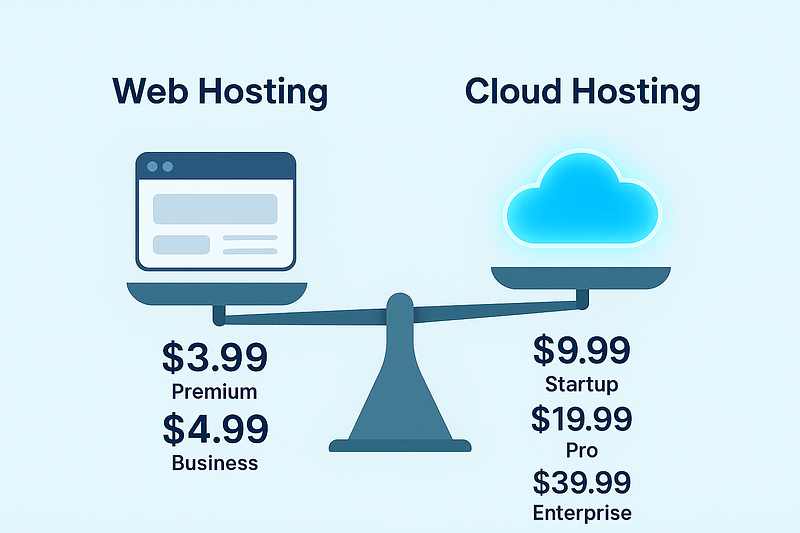
Web Hosting has 2 plans:
Premium Web Hosting -$3.99/month
Business Web Hosting -$4.99/month
Cloud Hosting also has 3 plans:
Cloud Startup -$9.99/month
Cloud Professional -$19.99/month
Cloud Enterprise-$39.99/month
In terms of cost, Web Hosting is cheaper. So, if you have a limited budget, Web Hosting is the way
Winner: Web Hosting
In any case, be aware of scams. It can destroy all your good efforts regarding your highly valuable website. For identifying scam, you can use Freelance Scam Detector AI. Just drop the project link or post and it will analyze the client, payment terms and contract risks saving you from fake offers and shady deals. You can also join $100K Money Hackers. Here you will get 35 AI tools for just $1/month. They will help you in safe and capable of earning money.
If you want to create and sell ChatGPT created products, then use AI PLR Toolkit + Crazy Bonuses. Here you will get 21 different prompts to create 21 types of PLR products using free AI tools like ChatGPT and Deepseek.
Frequently Asked Questions (FAQ)
Slow blogs lose readers and search rankings. Cloud hosting keeps speed consistent during traffic spikes, giving you better user experience and higher SEO visibility.
With web hosting you must upgrade manually. Cloud hosting adds resources instantly when traffic rises, so your blog grows smoothly without downtime.
Web hosting starts cheaper, but downtime and slower performance can reduce growth. Cloud hosting costs more upfront, but protects your blog’s traffic and earnings.
Yes. Search engines reward blogs that load faster and stay online. Cloud hosting supports Core Web Vitals and uptime which improves your ranking opportunities.
If you are experimenting web hosting is affordable. If you are building a blog as a business cloud hosting is safer, because it avoids migrations later.
Reliable hosting means faster delivery of client projects. Cloud hosting gives stability and speed which makes your work more professional and scalable.
Conclusion
The match up is not close once you measure what matters. For speed and scalability, cloud hosting beats web hosting hands down. The only reason to stick with web hosting is price. But even then, the savings can evaporate the moment downtime kills your readers’ trust. If you see your blog as a future business, cloud hosting is the choice that grows with you instead of against you.


The Money Hacker