
Ratan Tata, the Quiet Architect of Ethical Capitalism
Modern capitalism rewards speed. Loud founders dominate timelines. Short term wins get applause. Yet long term wealth follows a different logic. Stability matters. Trust compounds. Ratan Tata built power without noise. His career shows how ethics can function as strategy. This matters for founders, creators and solo builders navigating fragile attention markets today.
Quiet Power Wins
Ratan Tata’s journey began long before headlines. He was born in 1937 and went to the United States for architecture before returning to India to work inside the Tata group from the ground up. This early stretch taught him to read systems over spotlights and to build endurance before influence (The Guardian, October 11, 2024, Ratan Tata obituary). His leadership style grew out of patience, not performance.
He took the helm in a time of shifting economic rules. Under his watch, the Tata group made big international moves through careful deals and thoughtful investment. That global scaling happened without loud self-promotion or aggressive press cycles. (Reuters, October 9, 2024, Ratan Tata put India’s Tata Group on the global map). Reputation stayed steady because standards stayed clear.

The way leaders and citizens reacted to his passing shows the payoff of restraint in public life. Voices across sectors spoke about integrity, fairness and humility. This echoes how quiet credibility can outlast noise in modern leadership conversations. The Money Hacker has explored similar dynamics in political and social power, noting that enduring influence often depends on steady values rather than constant broadcast (The Money Hacker, December 9, 2025, Why Sonia Gandhi is Still Important for India). That idea holds for builders and creators too.
Ethics As Infrastructure
Ratan Tata treated ethics as structure, not symbolism. Culture inside the Tata group was designed to guide behavior during pressure, not decorate annual reports. Decision making followed shared standards across companies and generations. This approach mirrors how strong cultures operate as systems of control and coordination rather than slogans, shaping daily conduct and long term outcomes (Harvard Business Review, January–February 2018, The Leader’s Guide to Corporate Culture). Values lived inside processes, not speeches.

That infrastructure influenced hiring, leadership selection and crisis response. Employees understood boundaries early. Managers acted with clarity during uncertainty. Expansion did not dilute identity because culture traveled with scale. This consistency reduced internal conflict and protected external reputation. Ethical capitalism functioned as a stabilizer while the group entered volatile global markets.
The Money Hacker has described this long game mindset as a survival skill in unstable systems (The Money Hacker, About). Ratan Tata’s example shows why this matters today. Digital platforms shift fast. Rules change without warning. Builders who embed ethics into structure do not panic when trends flip. They rely on systems that hold when noise fades.

Wealth was Never the Point
Ratan Tata never framed success around personal accumulation. Wealth, for him, carried obligation. His public life reflected restraint rather than display, even while overseeing some of India’s most valuable enterprises. Philanthropy was not positioned as image management. It functioned as part of the group’s identity. Education, healthcare and long term social investment received priority alongside commercial growth. That balance shaped how his leadership was perceived across generations.
When he died at a Mumbai hospital, global coverage described him not just as a business figure but as an industry icon defined by integrity rather than excess (Associated Press, October 10, 2024, Ratan Tata, former chairman of India’s Tata Sons, dies at 86). That framing matters. Service strengthened credibility. Credibility sustained trust. For modern builders, especially online, this cycle explains durability. Audiences disengage from pure extraction. They remain loyal to purpose anchored leadership.

Reputation Becomes Pricing Power
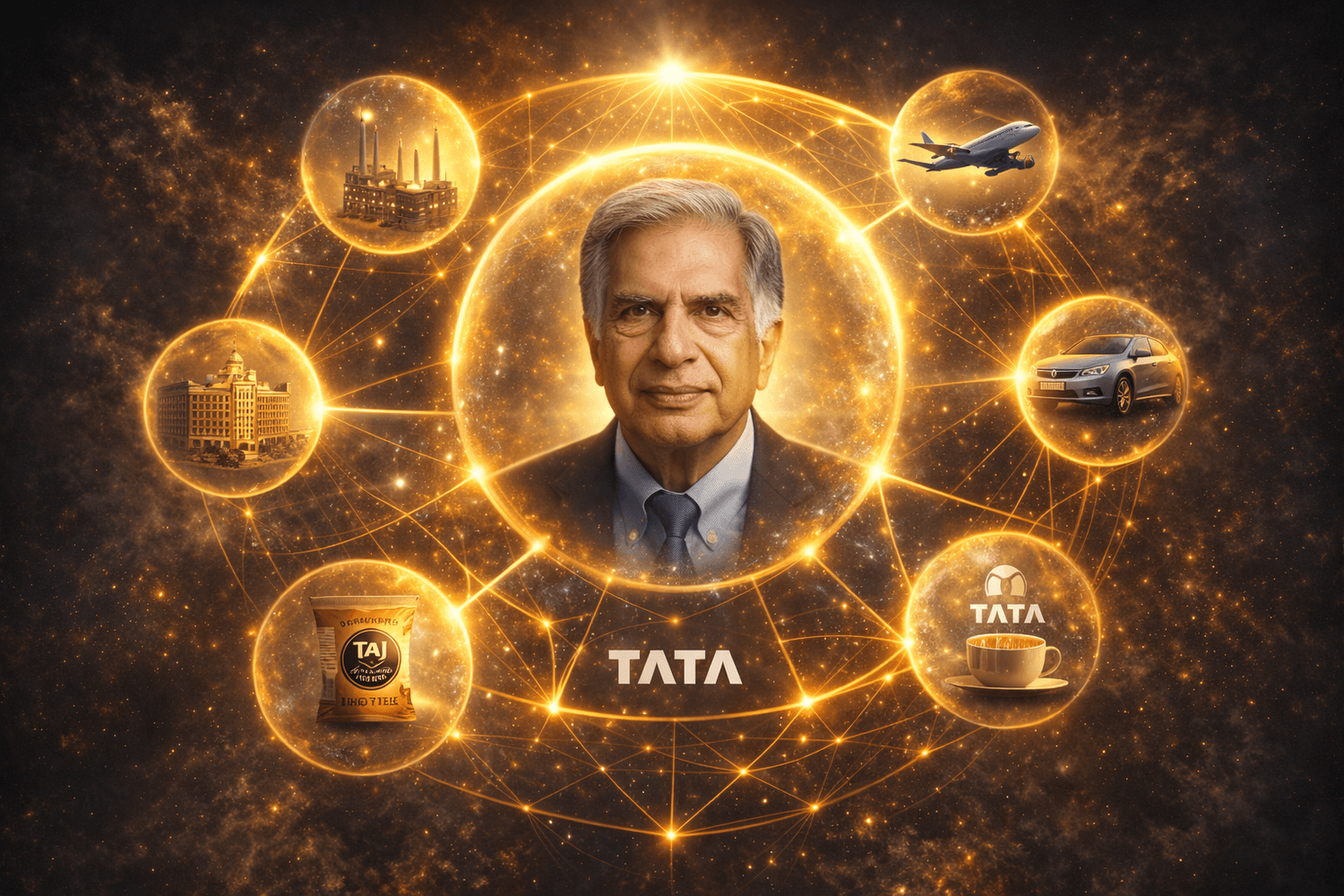
Reputation functioned as capital in Ratan Tata’s leadership. It was not built through visibility. It grew through predictability. The Tata Group became a signal of trust across industries and borders because conduct stayed consistent across decades. This credibility allowed the group to operate with lower resistance in global markets. Deals moved faster because doubts stayed limited.
a. Credibility That Outlived Cycles
Bloomberg described Ratan Tata as one of globalization’s defining figures, noting how his steady leadership helped Indian enterprise gain global legitimacy without provoking backlash (Bloomberg Opinion, October 17, 2024, India’s Ratan Tata Was One of Globalization’s Giants). That legitimacy translated into pricing power. Tata brands commanded confidence. Confidence reduced negotiation friction. Long term partners accepted stability over short term extraction.
b. Grooming Trust Through Restraint
Ratan Tata avoided constant public positioning. He allowed institutions to speak louder than personality. This grooming of credibility mirrors how influence can persist in digital and economic systems long after individuals step back. The Money Hacker has explored how legacy and trust continue shaping the digital economy even after public figures exit active roles (The Money Hacker, November 28, 2025, Legend Dharmendra’s Death, Freelancers Tribute and Digital Economy). In both cases, reputation became transferable power. It enabled better partners, stronger terms, and relevance beyond presence.

A Code Worth Copying
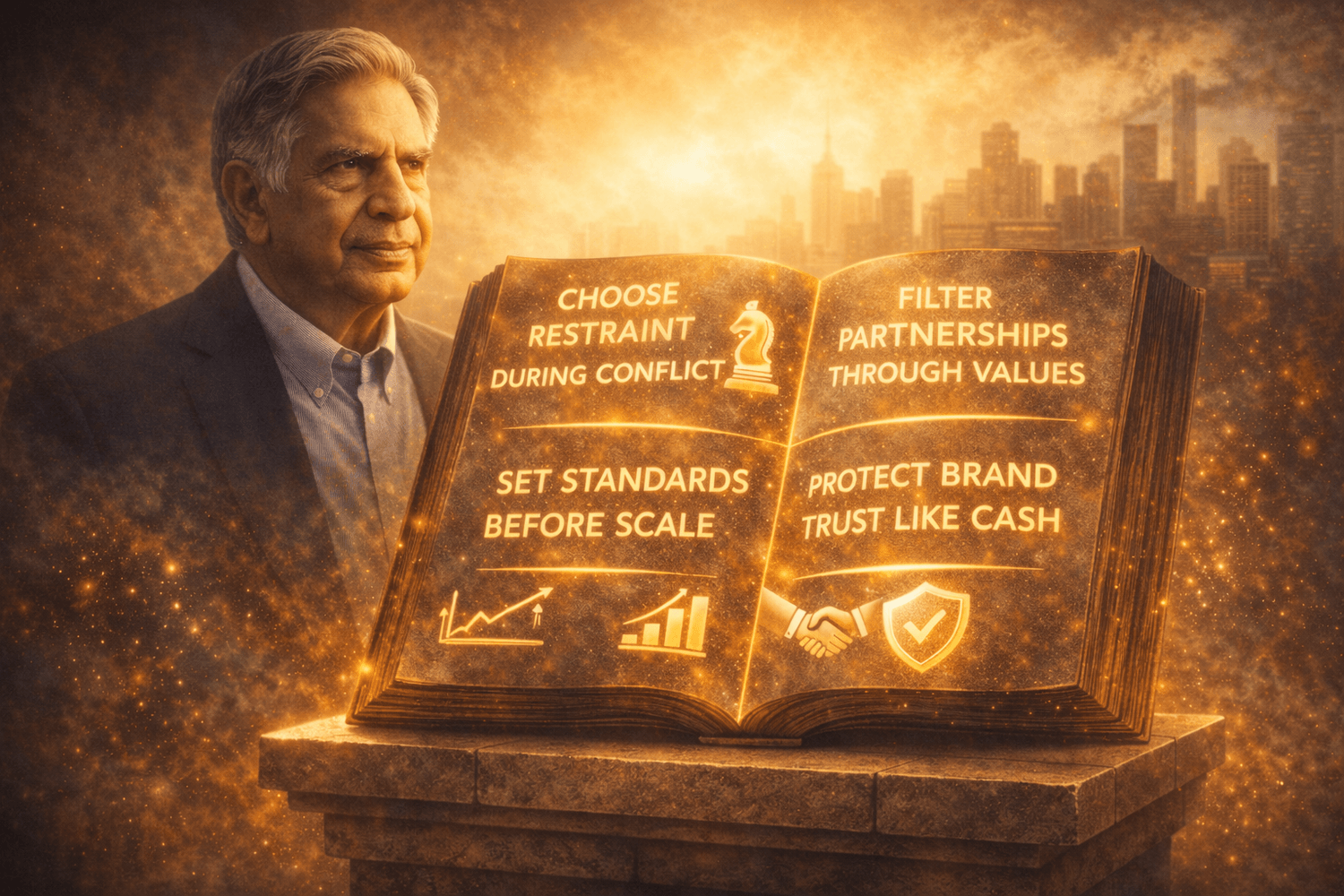
Ratan Tata did not write rules. He practiced them. His leadership choices formed a quiet code that guided the Tata Group through crises, expansion and scrutiny. Each principle emerged from real pressure, not theory. That is why the code still holds relevance for builders today.
Choose Restraint During Conflict
Ratan Tata avoided reactive leadership. During public disputes or internal tension, responses stayed measured. This restraint protected institutional credibility and prevented escalation that could damage long term trust.
Set Standards Before Scale
Expansion came only after governance and culture were clear. Systems matured before growth accelerated. This prevented dilution as the group entered global markets.
Filter Partnerships Through Values
Not every deal was accepted. Alignment mattered more than speed. This kept reputation intact even when opportunities looked lucrative.
Protect Brand Trust Like Cash
Trust was treated as a finite asset. Once damaged, it was costly to restore. Every decision weighed impact on credibility.
These were not soft preferences. They were survival mechanics. Ethical capitalism worked for Ratan Tata because it operated as discipline. Not as branding.
For grooming up as a businessman, you need to learn and you should have the proper tool to move on. To equip yourself more, you can join $100K Money Hackers. Here you will get 35 AI tools for just $1/month. They will help you in your online business, dating life, fitness journey, to have fun and so much more! Be with the Skool Community and enjoy your time.
Frequently Asked Questions (FAQ)
Quiet leadership builds trust through consistency. Audiences feel safety in predictable values. That confidence converts into longer retention and repeat demand.
Ethical structure lowers backlash risk and platform penalties. Income stability improves because confidence replaces volatility.
Patience sharpens judgment during expansion. Clear standards decide timing while restraint guards reputation.
Credibility grows from outcomes rather than volume. Results travel further across time and platforms, reducing dependency on daily visibility.
Strong principles signal reliability to buyers. Confidence shortens negotiation cycles and supports higher acceptance rates.
Endurance sustains relevance after trends fade. Systems protect momentum when attention shifts.
Conclusion
Ratan Tata proves a quiet truth. Ethical capitalism is not slower. It is stronger. It resists volatility. It compounds trust. In an economy obsessed with noise, calm strategy becomes rare advantage. Builders who understand this do not chase attention. They build foundations. Over time, those foundations win.
A very warm birthday wish for this great business soul! You will be forever within us.


The Money Hacker