
Why You Should Write Daily for 25 Days Before Quitting
Quitting early feels logical. Most drafts look mid at first. Motivation drops fast. But writing is a compounding skill. Progress hides in the boring middle. A 25 day streak forces enough reps to reveal real signal. It also builds proof of effort. Proof changes confidence.
The Week One Foundation
The first seven days lay the base. Output feels raw, but progress is real. Each session trains attention. Each paragraph builds familiarity. The brain starts mapping effort to reward. That is how momentum begins. A simple routine lowers hesitation and makes starting easier.
Research shows habit timelines vary widely. Fast transformations are rare. Early repetition matters more than early polish (UCL, August 4, 2009, How long does it take to form a habit?).
A skipped day does not erase growth, rather resume quickly. Keep the chain moving. Consistency turns early effort into lasting progress.

Why 25 Days Build Momentum
Momentum does not arrive overnight. It grows through repetition. Large scale research on habit formation shows wide variation in how long behaviors become automatic. Some patterns lock in faster. Others need more time. The key driver is steady repetition, not a fixed number of days (Healthcare, December 9, 2024, Time to Form a Habit: A Systematic Review and Meta-Analysis of Health Behaviour Habit Formation and Its Determinants).
25 days works as a pressure free runway. Startup friction drops. Decision fatigue fades. Writing shifts from effort to routine. The window feels achievable, which keeps commitment strong. It also creates a clean evaluation point. Momentum becomes visible through speed, clarity and reduced hesitation. That is when writing stops feeling forced and starts feeling owned.

The 21 Day Myth
Clean numbers sell well. Reality does not work that way. The 21 day idea traces back to plastic surgeon Maxwell Maltz, not modern behavioral science. Healthline explains how this estimate spread through pop psychology and why it stuck despite weak evidence (Healthline, October 16, 2025, How Long Does It Take for a New Behavior to Become a Habit?).
Long term observation tells a different story. Change follows repetition, not calendars. Media analysis dismantled fixed timelines years ago and landed on the same conclusion. Consistency shapes outcomes. Persistence beats countdowns (The Guardian, October 9, 2009, This column will change your life: How long does it really take to change a habit?).
21 days sounds neat. Progress stays messy. Real growth rewards those who keep showing up after the myth breaks.

System for Real Output
Real output needs structure, not mood. A simple operating system removes hesitation and protects focus. Decisions disappear because the rules are already set. Energy goes into writing, not negotiating with the blank page. This approach favors consistency over bursts. It also builds trust with the process. Showing up on schedule matters more than feeling inspired. Discipline turns effort into visible progress.
Daily Operating Rules
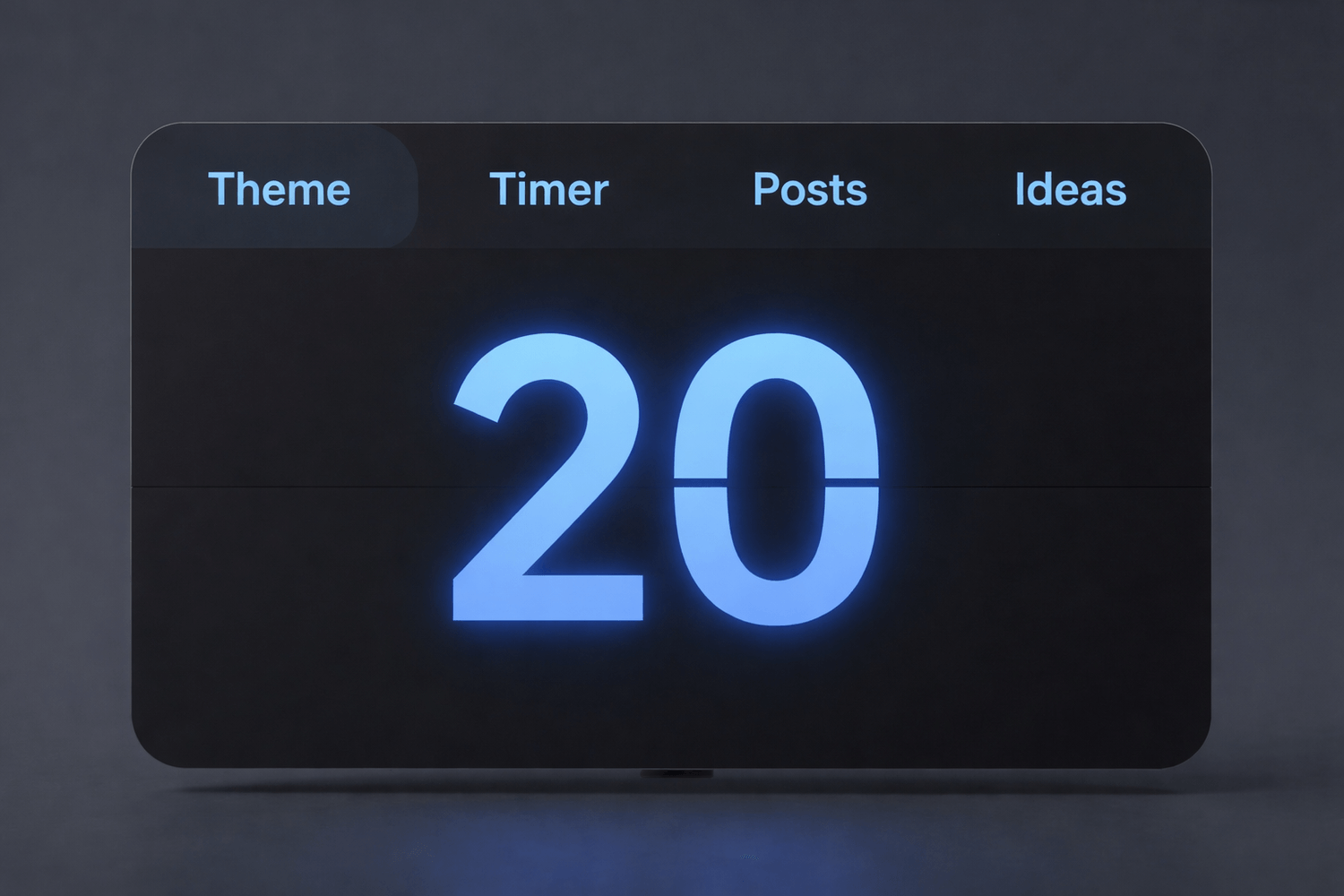
• Choose one theme for the full 25 day streak
• Set a fixed 20 minute timer
• Publish one short post or one draft section
• Store loose ideas in a running list
• End each session by writing the next opening line
This system works because it lowers resistance. Writing becomes automatic. Progress becomes visible.
Quality Rises after Panic
Creative quality improves once pressure fades. Early panic blocks flow because the mind focuses on judgment instead of output. Structure changes that dynamic. Clear constraints create safety. Ideas surface faster when the process feels controlled. Harvard Business Review explains how creativity responds to systems that reduce cognitive load and force action over waiting (Harvard Business Review, January 9, 2019, How to Be Creative on Demand).
Around the third week, a visible shift appears. The blank page stops feeling hostile. Thoughts connect with less effort. Voice sharpens through repetition. Editing becomes refinement instead of rescue. Quality rises because fear steps aside and momentum takes over.

Money Hacker Proof
Fear of silence stops many writers early. Metrics look flat. Feedback feels absent. Money Hacker content addresses this gap with clarity and systems. These examples show how consistency builds leverage before results become visible.
Output Comes Before Attention
Early traction is not the signal. Volume is. This article explains why publishing without chasing reads builds the foundation most creators skip (The Money Hacker, September 2, 2025, Nobody Will Read What You Write).
The core idea is simple. Keep shipping. Attention follows reliability.
Direction Beats Guesswork
Beginners stall without a path. This guide breaks writing growth into practical moves that reduce confusion and sharpen focus (The Money Hacker, August 25, 2025, Effective Strategies for New Writers).
Clear steps replace random effort. Progress accelerates.

Tools Reduce Friction
Speed matters once output exists. This resource shows how the right tools support planning, drafting, and rewriting without draining energy (The Money Hacker, August 25, 2025, Ultimate AI Tools You Must Know).
Tools amplify consistency. They do not replace discipline.
Discipline Compounds Income
Writing is not just expression. It is an asset builder. This long term plan connects daily effort with scalable results over time (The Money Hacker, September 13, 2025, 6 Months Video Income Blueprint to Earn 1000 Dollar and More).
Systems reward patience. Momentum creates opportunity.
Money Hacker proof points share one message: Output first, direction next. Tools support execution. Discipline compounds results. Silence early does not mean failure. It means the system is still warming up.

Final Rule for Quitting
Quitting should follow evidence, not emotion. Discomfort shows up early because the system is still forming. The 25 day window acts as a clean filter. It separates resistance from real misalignment. Effort becomes visible through speed, clarity and ease of starting.
If writing feels flat after the window closes, pivot with data. Review output and energy. Adjust direction accordingly. If momentum exists, protect it. Keep publishing. Growth often appears right after patience runs out. Real creators do not quit mid test. They finish the process, then decide with clarity.

You can take support of AI to improve yourself as an efficient writer. For mastering copywriting and earn maximum money through it, you can use tool like 620 ChatGPT Prompts for Copywriting. It will help you to enrich yourself as an excellent writer.
If you are adamant to make money in any other capacity , join $100K Money Hackers . You need not to over try for anything as you will get all your required tools here. You can also access The Quick $750 Hack if you want to make money very quickly. It is normally of $49 Value. But for readers of The Money Hacker Blog, the discount is 100%!
Frequently Asked Questions (FAQ)
Daily writing sharpens thinking through repetition. Output builds skill faster than sporadic effort. Consistency also creates reusable assets for future income paths.
Sustained publishing builds volume that attracts discovery. More pages increase chances for visibility and reuse. Momentum also shortens production time over weeks.
Early silence kills motivation. Unclear direction adds friction. Lack of routine causes hesitation before each session.
Speed of drafting improves. Idea clarity strengthens. Starting effort feels lighter after repetition.
Single theme focus reduces decision fatigue. Narrow topics deepen authority signals. Repetition trains voice faster.
Decision works best after enough output exists. Patterns become visible through energy and flow. Data replaces emotion once volume appears.
Conclusion
Writing daily for 25 days is not about talent or motivation. It is about evidence. The streak removes excuses. It shows whether resistance was the problem or direction was wrong. Most people quit before data appears. Finishing the window creates clarity. Momentum replaces doubt. Skill starts compounding. After day 25, decisions become informed, not emotional. That is the real win.


The Money Hacker