
Vince Zampella, Call of Duty and the Immortality of a Great Creator
Creative impact survives when work becomes routine inside millions of lives. Video games achieve this better than almost any medium by turning design into habit and habit into identity. Vince Zampella fits this truth because his work trained how people play, compete and return. His tragic death may remove him from the world, but it cannot remove his presence from us. His great creation Call of Duty continues to live inside our daily behavior, shared language and global culture, keeping its creator active through the system he built.
Zampella and Call of Duty
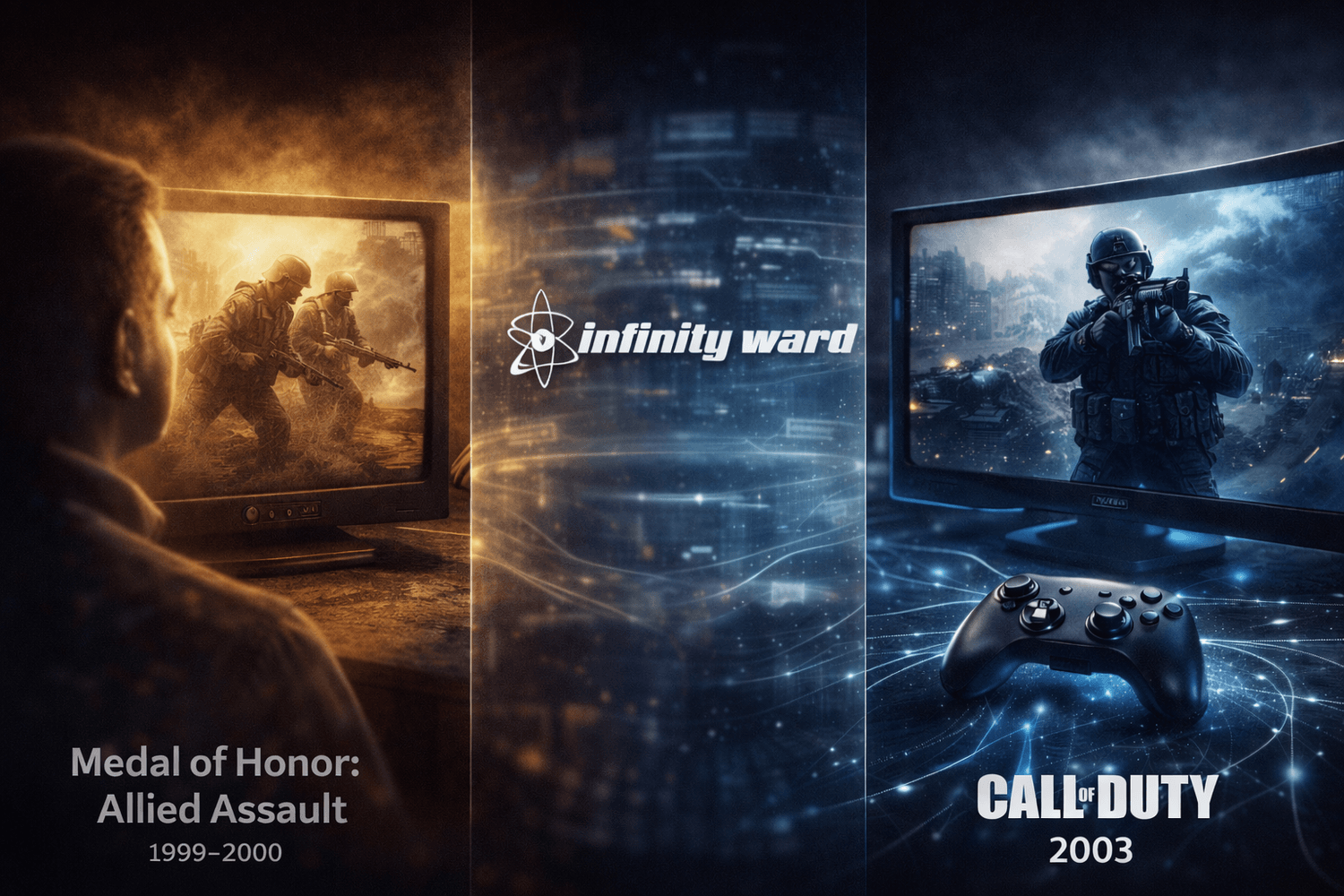
Vince Zampella entered the spotlight through his work on Medal of Honor: Allied Assault, a title widely credited with shaping modern military shooters and multiplayer realism (IGN, January 22, 2013, The History of Call of Duty). That experience directly informed the foundation of Infinity Ward, which he co-founded in 2002 to pursue tighter gunplay, faster pacing and a more cinematic approach to combat design. Industry retrospectives describe this period as formative in defining his creative instincts (The Guardian, December 23, 2025, Call of Duty’s Vince Zampella was a video games visionary).
Call of Duty launched in 2003 with these ideas baked in, immediately setting itself apart from slower, simulation heavy competitors.
What made Zampella’s approach distinct was focus. Combat felt immediate. Controls felt intuitive. Progress felt constant. Multiplayer did not punish newcomers, yet it rewarded skill over time. That balance became the franchise’s spine and allowed Call of Duty to scale globally while maintaining accessibility. The design philosophy did not chase trends. It defined them, which explains why the series stayed dominant while many rivals disappeared.
Shocking Death of Vince Zampella
The gaming world was stunned when news broke that Vince Zampella had died at the age of 55 in a sudden car crash in Southern California. The incident occurred on December 21, 2025, along the Angeles Crest Highway, a mountain road known for sharp curves and narrow stretches. Authorities stated that the vehicle left the roadway near a tunnel, struck a barrier and caught fire soon after impact (Entertainment Weekly, December 23, 2025, “Call of Duty” Creator Vince Zampella Dies at 55 in Los Angeles-Area Car Crash).
Initial reports confirmed the crash involved a high performance sports car, with Zampella pronounced dead at the scene. A passenger was also critically injured and later died. Investigators said no other vehicles were involved and the cause remains under review, with speed, road conditions and mechanical factors all part of the ongoing inquiry (People, December 23, 2025, “Call of Duty” Developer Vince Zampella Dead at 55).

The suddenness of the event deepened the shock. Zampella had remained active in the industry and visible in public life. There were no prior signals of decline or withdrawal. One moment, his work continued shaping modern gaming. The next, the creator was gone. The contrast between an abrupt ending and a living legacy made the loss feel even heavier for fans and peers alike.
News Becomes Global Trend
Social feeds lit up fast after the crash story spread. Tributes arrived from studios, journalists and players across regions. Statements from Electronic Arts framed his influence as “profound and far reaching,” while public reactions amplified the story across platforms and comment threads (Euronews, December 23, 2025, Call of Duty video game co-creator Vince Zampella dies in car crash aged 55).
This pattern is not new. It follows a familiar grief cycle inside pop culture. The Money Hacker John Lennon piece shows how collective shock forms in real time, then turns into shared memory through gathering, singing and constant retelling across media spaces (The Money Hacker, December 9, 2025, Mystery of John Lennon’s Killing and Money Hacker Mindset). Zampella’s story hit a similar nerve because his work shaped daily life for gamers, so the reaction became personal, then viral, then historical.

Creators Never Die
Creators never die when their work becomes part of everyday life. Games, songs, films and ideas keep repeating long after their makers are gone. Each replay carries memory forward. Each return refreshes presence. Vince Zampella lives inside the mechanics people still use, the instincts players still follow and the rhythms that feel natural without explanation.
Immortality in creation is not symbolic. It is functional. Systems continue working without the builder. Audiences keep choosing the work without being asked. That choice keeps creators active in culture. As long as people play, remember and return, the creator remains alive through what was built.

Money Hacker Lesson for Digital Creators
Zampella’s story is not only gaming history. It is a creator blueprint. Build something people return to, then let the system carry the name.
Turn Attention into an Asset
Call of Duty stayed alive because it converted focus into a loop people repeated. The same rule applies online. Attention pays, but it also pressures creators into constant output (The Money Hacker, December 15, 2025, How the Attention Economy Pushes Creators Too Far). Build an asset outside the feed. Build a home base that keeps value even when reach drops.
Catch Trends, Then Package Value
A franchise wins when it rides culture without losing identity. Trend waves can work the same way for freelancers. The key is conversion, not vibes. Convert a moment into a service, template or product people can buy fast (The Money Hacker, November 13, 2025, How Freelancers Turn Viral Trends into Real Income). That is how attention turns into real outcomes.

Survive Like a Builder
Longevity needs structure. Creators get unstable when income depends on one platform or one spike. Survival thinking fixes that by designing buffers and layers (The Money Hacker, December 23, 2025, Survival Thinking Freelancers Can Learn from Forefathers’ Day). Zampella’s legacy proves the point. Systems outlive moments because they are built to endure.
Practical Move List
• Build one signature format and repeat it weekly
• Create one archive page that organizes your best work
• Turn every trend win into an owned asset like a post, page, or product
• Track proof like screenshots, metrics and results, then keep it visible

Want to be a great creator in digital arena? Need guidelines from experts? Searching appropriate toolkit? Then $100K Money Hackers is the perfect choice for you. Here you will get necessary guidelines as well as required tools to ensure your financial freedom. You can also get access to The Quick $750 Hack if your aim is to make money quickly as a creator.
You can also collect PLR products like AI PLR Toolkit + Crazy Bonuses. Here you get 21 different prompts to create 21 types of PLR products using free AI tools like ChatGPT and Deepseek. It will definitely enhance your capacity.
Frequently Asked Questions (FAQ)
Vince Zampella demonstrated how influence grows through behavior shaped over time. His work trained instinct rather than chasing applause. That approach turned design into culture.
Call of Duty thrived by making return feel natural. Familiar patterns reduced friction. Engagement stayed strong because comfort replaced learning curves.
Inconsistent structure drains focus fast. Short wins distract from sustainable progress. Stability disappears when effort depends on noise.
Ownership creates security. Products, archives, plus services keep value intact. Reach may fall yet assets remain active.
Processes operate without supervision. Audiences continue participation through habit. Continuity replaces presence.
Repeatable formats establish memory. Consistency earns trust over time. Revisit value keeps relevance alive.
Conclusion
Vince Zampella’s life reminds us that creators are remembered through what people keep using. Call of Duty did not survive on hype. It survived because players returned again and again. That return turned a game into culture and a creator into memory. His death closed a chapter, but his system still runs every day across screens and communities. For creators, the lesson is clear. Build work people revisit. Design habits, not moments. When creation becomes routine in someone’s life, immortality quietly follows.


The Money Hacker